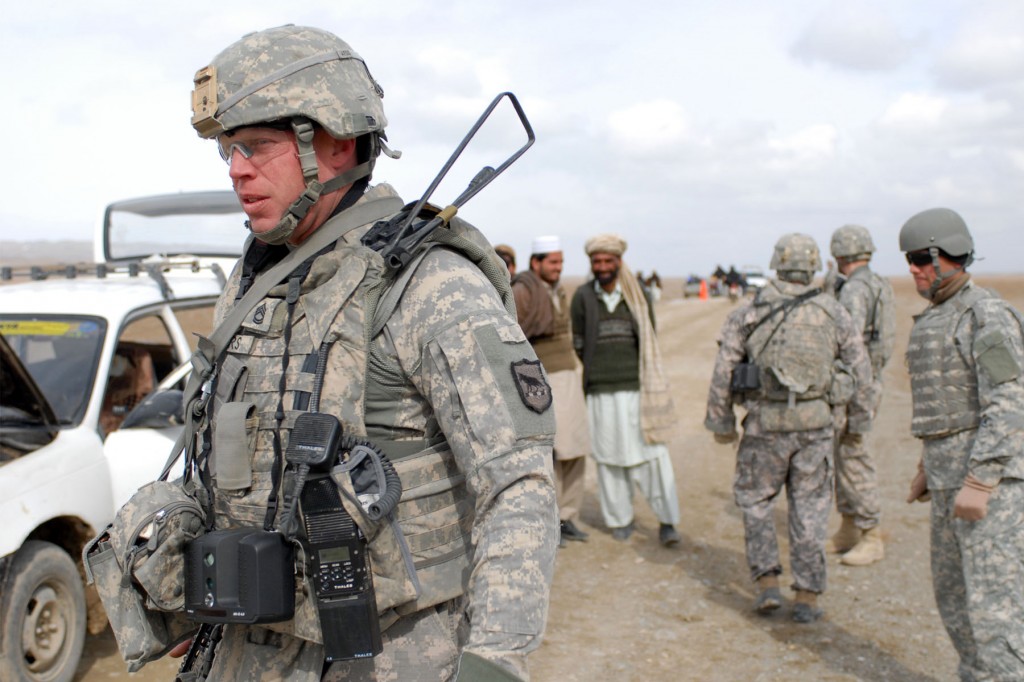
South Dakota National Guard soldiers on duty in Afghanistan.
The Identity Debate: ‘The Bonds That Unite’
“These force structure changes in no way diminish the contributions of the National Guard,” Under Secretary Carson told me. “No one is disparaging that. [And] we have considered their input; in fact we have changed ARI as it was originally conceived to reflect the input that the TAGs [adjutant generals] and the NGB [National Guard Bureau] and the outside groups have weighed in with,” including the National Guard Association of the US itself.
The biggest changes, however, require Congress to approve funding above the Budget Control Act caps, a long shot, or carving up some other defense priority to help the Guard, which is politically more likely. The revised Aviation Restructure Initiative would buy 100 new LUH-72 Lakotas to replace geriatric TH-67 training helicopters at Fort Rucker — originally the Lakotas would have been taken from the Guard — and increase the Guard’s fleet of UH-60 Black Hawks by 111.
That’s a good trade for the Guard, Army leaders argue, because Black Hawks are multi-mission utility aircraft that can carry emergency supplies, relief workers, or evacuees in civilian disaster relief, while Apaches are purely war machines. “An AH-64 does absolutely nothing for a state,” said Lundy.
“Active component leadership says the Black Hawk is really better for domestic missions,” said Goheen. “Well, yeah, certainly that’s the case. But is the Army going to come around and say that about tanks, about Bradleys? This is where it starts; where does it end?”
The Army is not currently proposing to strip the Guard of ground combat units. Congress, for its part, consistently adds money to the budget request to buy the Guard additional heavy armored vehicles. But Goheen’s response reveals the deep anxiety in the Guard that the regular Army will relegate them to a supporting, non-combat role.

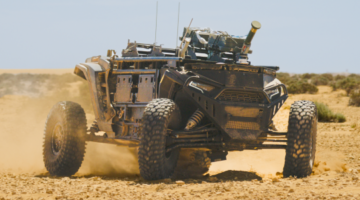
AGVs vs. UGVs: A new class of ground autonomy takes the field
One commander, many robots: Fully autonomous ground vehicles are reshaping the battlefield.
“We’re moving away from ‘Total Force,'” in which any major combat operation requires both regular and National Guard soldiers, Goheen said. “Total Force was a lesson learned from Vietnam,” when the Guard was never mobilized.
“There is a spirited discussion abut how best to structure the Total Force,” Carson told me. “I would never want to overstate the acrimony…. With a background in politics myself, I really see it as a spirited, good faith debate in which very difficult decisions are going to have to be reached, decisions not everyone will agree with. But in the end, I think no one doubts that the bonds that unite the components are far, far, far stronger than the forces that would tear them apart.”
Breaking Defense Video