BELFAST — In partnership with France, Germany says it is working to a deadline next month aimed at resolving a long-running industrial dispute over the troubled New Generation Fighter (NGF) element of Europe’s Future Combat Air System (FCAS).
The last ditch effort to save NGF from collapse centers on France’s Dassault and Germany’s Airbus aligning on a common approach for the NGF in the coming weeks — a timeframe communicated by a German official today and widely reported.
“Germany and France have agreed to a final attempt at mediation between the industries, to be conducted by experts,” said the official, according to Politico and other outlets. “Due to the upcoming decisions on the federal budget, a result must be reached by mid-April.”
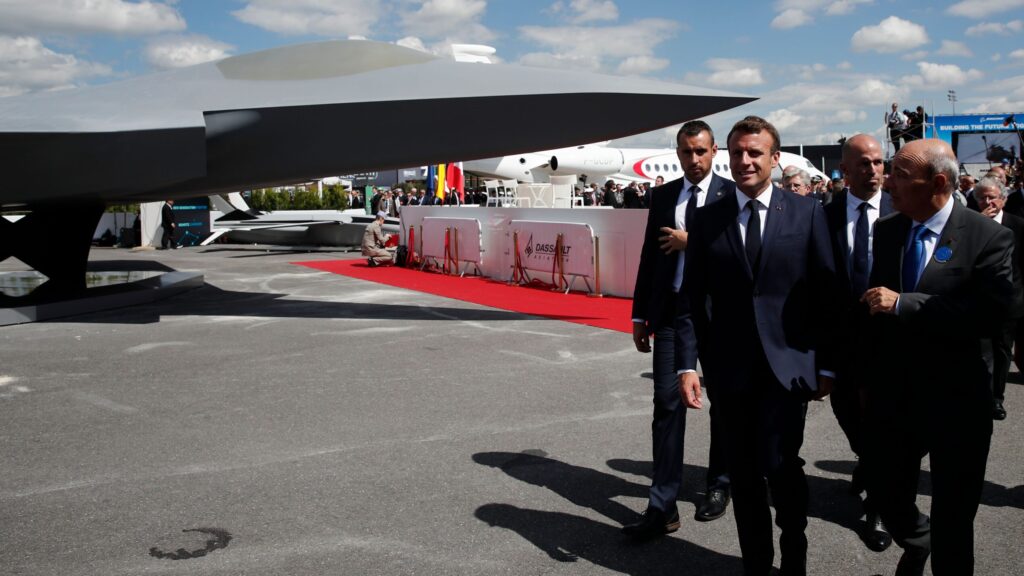
Ahead of a European Council meeting today, French President Emmanuel Macron offered a similar message on attempting to make an industry breakthrough. “Our job is to ensure they reach an agreement, so we have jointly decided to launch an initiative to bring Airbus and Dassault closer together in the coming weeks,” he said.
Amid an intense row between the two manufacturers over NGF leadership and workshare, it remains to be seen how a compromise could unfold. Airbus recently supported an alternative two fighter jet approach where Germany, Spain and potentially other willing partners would develop one aircraft — leaving France to separately build its own (Airbus represents both Germany and Spain at an FCAS industrial level).
Dassault CEO Eric Trappier denounced talk of a two aircraft concept at that time, arguing that operational requirements between Paris and Berlin align.
Trappier has also shown little interest in compromise of late, claiming earlier this month that “if Airbus maintains its position of not wanting to work with Dassault, then the project is dead.”
Much like the Airbus push toward assessing alternative options, Trappier asserted that, “We will find other partners if we need to.”
Those comments emerged after German Chancellor Friedrich Merz told a local political podcast in February that France requires both a nuclear and aircraft carrier-capable future fighter jet, but “That’s not what we currently need in the German military.”
Designed to replace Eurofighter Typhoon and Rafale combat aircraft starting in 2040, NGF is the driving force behind FCAS that also includes development of new weapons, drone swarms, sensors and a “combat cloud” communications network.


MQ-9B and Gambit Series: Advancing European Defense Capabilities
GA-ASI will build Gambit aircraft in Europe, partnered with European-based companies, with airframes available for international procurement starting in 2027.
At a programmatic level, FCAS was set to launch Phase 2 after April, but Airbus and Dassault are no longer negotiating on this new pillar of work, according to an industry source who spoke on background on the sidelines of the Munich Security Conference last month, to bluntly discuss the state of negotiations.
The next phase was slated to involve production and flight of a NGF demonstrator later this year but looks increasingly unlikely.
Breaking Defense Video