WASHINGTON — Defense Secretary Pete Hegseth told lawmakers today that the department may be reevaluating some of the steep aviation budget cuts spurred by the Army Transformation Initiative.
“I actually think it’s something we’re taking another look at,” Hegseth told Rep. Rosa DeLauro when asked about the drastic drop in funding for high-profile helo programs in the Pentagon’s proposed fiscal 2027 budget. “There are some very good things in the Army Transformation Initiative, and there are some things that we’ve needed to get another look at, and so I think you’ll see a review of some of those things.”
ATI, announced last spring, came with drastic cuts aimed at reprioritizing the service’s aviation fleet. Such changes initially included replacing the Apache AH-64D Apaches with the AH-64E models, scrapping the Future Tactical Uncrewed Aircraft System competition and prohibiting additional buys of General Atomics’ Gray Eagle drone to, at least in part, pay for big ticket items like the new Future Long-Range Assault Aircraft, also known as the MV-75.
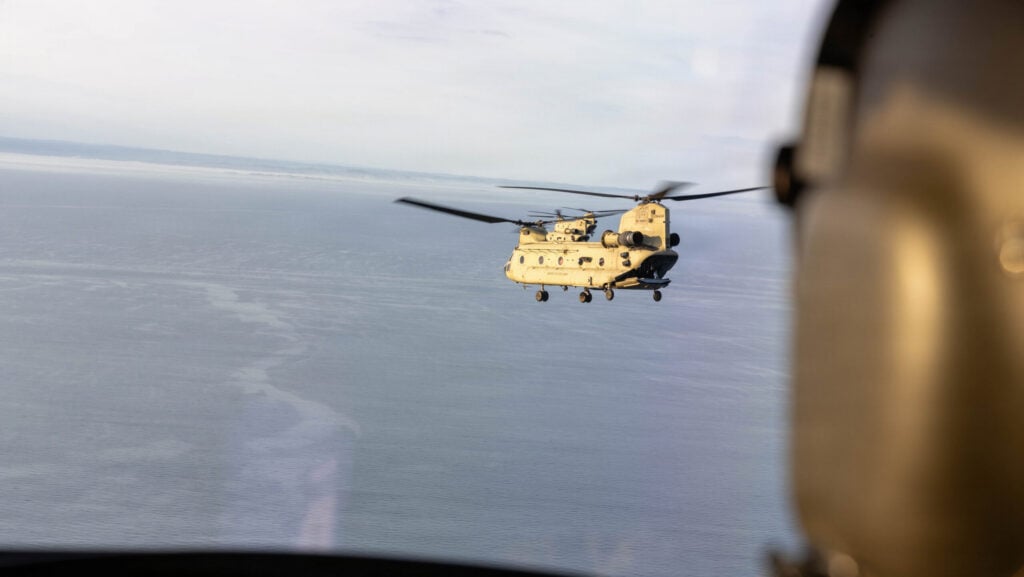
But several months after such cuts were announced, the Army’s FY27 budget request seeks to make even more reductions. For example, procurement for Apaches declined from $361.7 million in FY26 to $1.5 million, procurement for Black Hawks declined from $913 million to $39.3 million, and funding for Chinooks declined from nearly $629 million to $210 million.
Today during Hegseth’s testimony before the House Appropriation Committee’s defense subcommittee, Ranking Member DeLauro expressed concerns over how such helo cuts could be detrimental to the defense industrial base just as the Trump administration’s National Defense Strategy advocates for “a strong industrial sector capable of meeting both peacetime and wartime production demands.”
“Your department’s budget request cuts over $5 billion from the industrial base in the aviation sector alone, effectively shutting down all current Army aviation platforms. These are current production platforms the force relies on for lift, for sustainability, disaster response, homeland missions, etc.,” she said. “How did the department arrive at the conclusion that reducing procurement for these Army aviation platforms strengthens rather than weakens the aviation industrial base?”
Republican Rep. John Carter of Texas also expressed concern to Hegseth over the future of the Apache, Blackhawk and Chinook helos during the hearing, stating they are “essentially zeroing out” in FY27 funding. He said he was worried in particular that the cuts could leave a gap in the Chinook’s historical cargo mission as the MV-75 will reportedly carry out utility and attack missions.
Senior Army officials have said for months that the existing aircraft aren’t going anywhere, and that there’s plenty of money in the budget for sustainment. Maj. Gen. Clair Gill, Program Acquisition Executive of Maneuver Air, told reporters last month that the Army is not interested in divesting its fleet of Apaches, Black Hawks or Chinooks, but it is rather geared toward a plan to keep much of the existing fleet flying for the next several decades.
Hegseth, however, did appear to open the door to those aircraft being replaced by other options — just not yet.
“Some of [ATI] is very good. There’s a lot of goodness in there, but I think there are some things that assumed future platforms that may not be there yet. Take the Apache, for example, which our war fighters rely on and love. Take the Chinook, which is used all the time,” Hegseth said. “We need to make sure we’ve got something there for it before you divest or we’re not investing in that capability. So we look forward to reviewing that with you and ensuring that we don’t have a gap.”
Breaking Defense Video