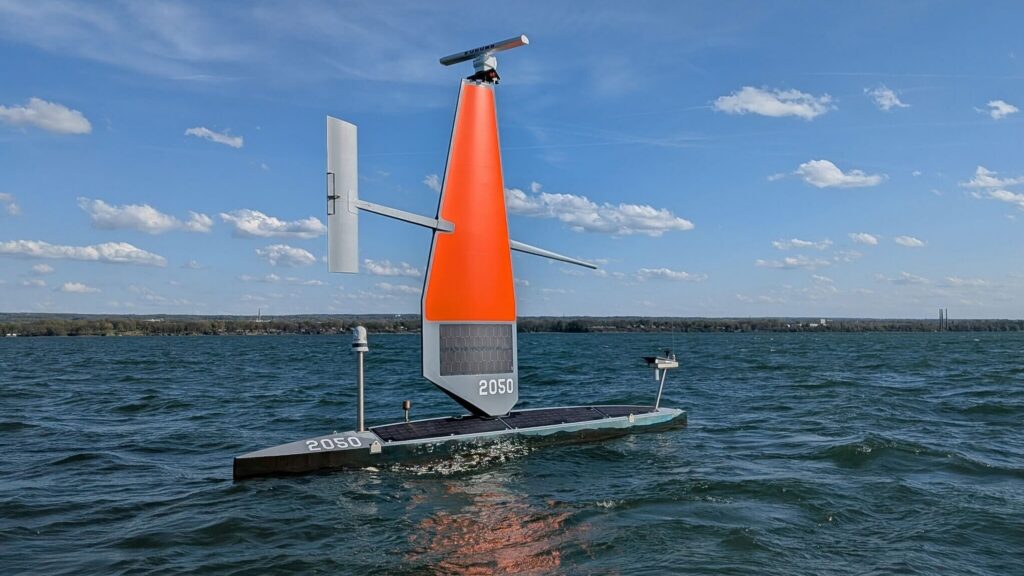
WASHINGTON — The Coast Guard is deploying more than a dozen Saildrone Voyager unmanned surface vessels (USVs) to the Great Lakes and the North Atlantic region in an effort to bolster maritime domain awareness.
The Voyager is equipped to conduct persistent coastal surveillance and nearshore mapping missions while remaining at sea for roughly 100 days at a time, according to the unmanned maritime systems manufacturer. In the Great Lakes, the unmanned vessels will support border security operations through monitoring and flagging suspicious activity, while in the North Atlantic, the vessels will assist Coast Guard efforts countering illegal fishing.
Ultimately, the 16 deployed Voyagers are designed to close visibility gaps — allowing Coast Guard personnel to tackle rescue and interdiction missions, according to Saildrone President John Mustin.
“The way that I have characterized it is we’re helping them to shift from a reactive model to now a proactive, persistent surveillance net, and what that allows is, it allows each precious member of the Coast Guard to focus on those things that only they can do, so we think of that in terms of offloading missions that may be mundane or trivial, and allowing them to focus on those things that only humans can do,” Mustin, the former chief of Navy Reserve, told Breaking Defense.
“So rather than wasting precious cycles or fuel just on scouring open ocean, we can be there all the time in that persistent surveillance net, and we can identify suspicious behavior that allows them to focus on just the things that require their attention,” Mustin said.
Saildrone has previously partnered with the Coast Guard dating back to 2023 to conduct operations in regions including the service’s Southwest and Southeast districts, which encompass the Caribbean and the Pacific Ocean.
However, this deployment with the Coast Guard presents a new challenge because conditions in the northern waters are very different than those in the south, according to Mustin. These environmental factors also lend themselves well to the upsides of incorporating unmanned systems, he said.

If software and agentic AI are key to mission success, accelerate them to the front lines
A commercial prototype in a sandbox is different from deploying AI across classified networks.
“A wonderful benefit of autonomy is in areas where the sea state is dramatic and or the weather is terrible, we don’t get seasick, we don’t get tired, we don’t have to,” Mustin said. “We’re not subject to crew rest, so we can cover areas that would be very challenging based on environmentals … our drones are able to stay out there for hundreds of days at a time and provide this persistent presence.”
The initiative stems from a $15.5 million contract signed in March, the Coast Guard said in a news release last month. The mission kicked off in May, and is slated to continue through October. Mustin said that there are other areas, including near Alaska in the Northwest and other parts of the Pacific near Guam, that could also prove applicable for future partnerships.
“Our hope is that we continue to demonstrate value and we can continue to demonstrate that we are a very responsive partner, and we will tailor not only the kinds of missions we perform, but the way we perform them based on their feedback,” Mustin said.
The Voyager is one of several USVs Saildrone produces. The company also unveiled a new medium unmanned surface vessel in April called the Spectre that the company says is outfitted to conduct anti-submarine warfare (AWS) and intelligence, surveillance, and reconnaissance (ISR) operations.
Breaking Defense Video