MILAN — From new fighter jet tactics to arming up other aircraft, Ukraine has altered its strategies to make intercepting Russian drones and missiles more affordable and better suited to record wartime attacks launched by Moscow in recent months, according to a new analysis.
A report published last week by the London-based Royal United Services Institute noted the “radically different” nature of air warfare in the Ukraine war as of July 2026. Whereas the bulk of Russia’s air campaign initially consisted in the first years of launching long-range strikes and using cruise and ballistic missiles to degrade Ukrainian communications and industry, today the situation is much different.
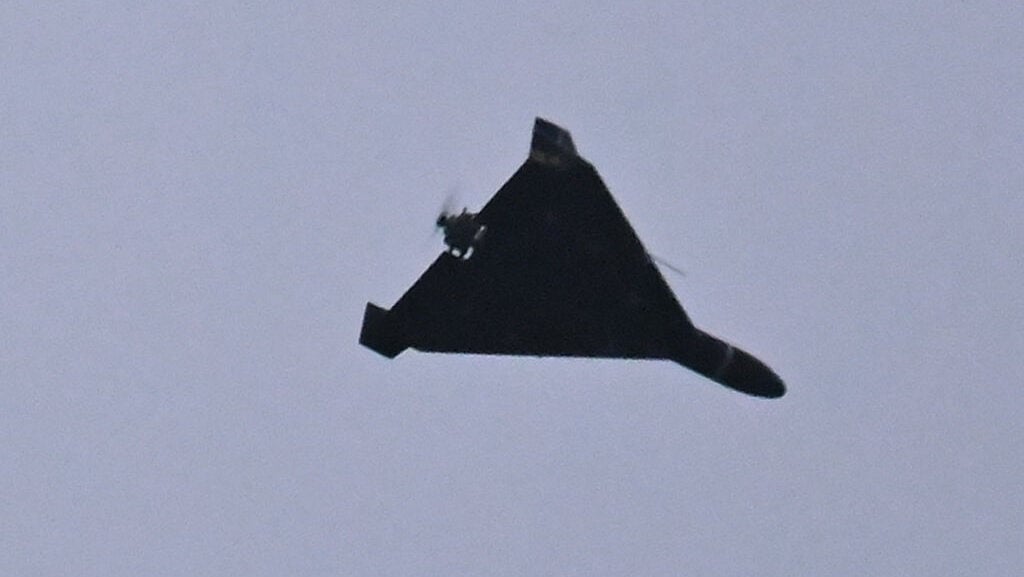
Russian strikes now traditionally begin with waves of many hundreds of one-way attack (OWA) drones and jet-powered Shaheds alongside decoy drones sent towards Ukraine to saturate its air defenses, the report said.
Closely following was the deployment of dozens of cruise missiles. According to the New York Times, last month alone Russian forces fired at least 126 ballistic missiles, a record high of the conflict.
From the beginning of the war, Ukraine has employed high-end air defense systems, such as the in-demand, American-made Patriot system. But stocks are dwindling, so now, for the initial line of defense against these barrages, Ukraine has relied on a dense, layered network of inexpensive short-range air defense systems (SHORAD), operated by dispersed air defense teams.
Since massing and placing these units behind borders and frontlines at extensive depth, these systems are now able to counter the majority of Russian Geran OWA drones, the report found.
Capt. Daine Van de Wall, a US Army infantry officer who served with the Security Assistance Group–Ukraine, described the organizational advantages to the mobile teams in a Small Wars Journal essay in May.

Localizing tactical communications for sovereign, NATO-ready C3I
Beyond foreign sales, Rafael’s model enables tech transfer, local engineering, and is a template for NATO partners.
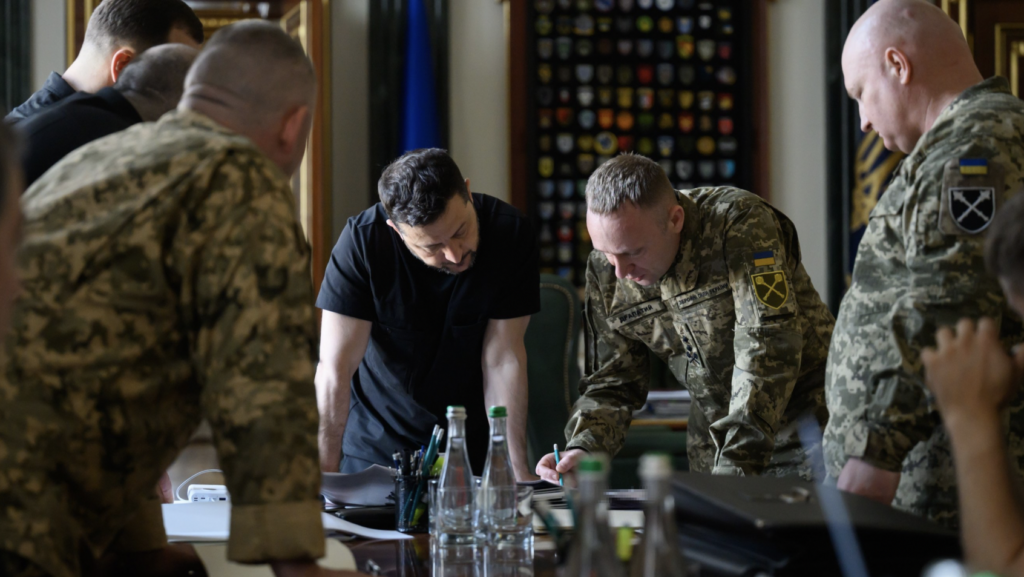
“Ukraine’s most significant adaptation is not the technology itself, but how formations from the brigade level down to the squad have absorbed and operationalized it. Lower-echelon units routinely assume responsibility for localized air defense, fires, and other functions traditionally associated with higher headquarters,” Van de Wall wrote. “These developments are driven by necessity. Ukrainian units cannot assume air superiority, spectrum dominance, or the successful suppression of enemy air defenses before maneuver. Instead, they operate under the expectation that these domains will remain contested throughout the fight.”
Justin Bronk, senior research fellow of airpower at RUSI and the author of the think-tank’s report, called the mobile air defense teams “increasingly successful,” but also pointed to innovative air defense concepts like “the helicopters and fixed-wing propellor and turboprop-powered gunship interceptors [transport aircraft modified with onboard machine guns] that are a much more affordable, sustainable way to interceptor as many of the OWA drones as possible — accepting that there will always be more.”
Since last year, Kyiv has also often turned to Western fighter jets, such as the F-16 and Mirage 2000-5, to shoot down these aerial threats, with RUSI reporting significant successes, destroying “well-over” 2,500 Geran and Gerbera OWA drones.
Here too, Ukrainian F-16 pilots push for affordability, Bronk noted, using the 20 mm cannon and US-supplied AGR-20 rockets to save missiles. At the same time, they have developed more effective — and safer — methods for doing so in the current battlefield environment.
“They’ve developed much more suitable tactics in contexts that minimize the very real danger of being hit by fragments from exploding Geran-2s and 3s — it is very difficult to safely engage relatively slow flying, small targets like these with a fighter like the F-16,” he said. “This is due to high-closure speeds and having to get quite close to get a good visual solution on the small drone through the HUD [heads-up display].”
Images appearing to show an F-16 flying with AGR-20 rocket pods surfaced back in December 2025 on Ukrainian military Telegram channels, according to Ukrainian media.
Similar to Van de Wall’s point, the war-torn country has also implemented other shifts in its command-structure doctrine. On Wednesday, the New York Times cited Ukrainian commanders as saying that Air Force pilots now have authorization to change course from planned mission targets if they detect a window to hit a priority target, such as a Russian radar or launcher, rather than having to wait for centralized approval.
However, the extensive use of Ukrainian F-16s to intercept increased volumes and waves of enemy drones, with Russian industry now producing over 6,000 OWA-types monthly, has resulted in several issues. The main one being that it has led to an unmaintainable number of airframe flying hours, as Bronk pointed out.
“[This issue] can only be meaningfully reduced by not regularly tasking fighters against such targets — saving finite flying hours, airframe fatigue life and air-to-air missiles for strike missions and intercepting high-priority threats that few affordable/scalable systems can reliably engage, notably cruise missiles,” he said.
A spokesperson for the Ukrainian drone manufacturer Skyfall told Breaking Defense last month that Russia was increasingly using jet-powered Shaheds, also called Geran-3 and Geran-4s, to hit inside Ukraine. These systems have posed an additional challenge for the Ukrainians because their faster speeds make interceptor drones or first-person-view ones — the country’s previous cheap alternative to counter earlier variants — insufficient to counter them.
Breaking Defense Video