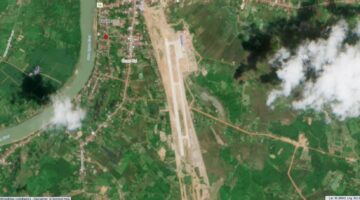
China opens training center with Laos, marking third overseas military base
Satellite imagery shows the new facility is built in part on a purported old US airstrip used during the Vietnam War.
Satellite imagery shows the new facility is built in part on a purported old US airstrip used during the Vietnam War.

The drone age did not end armored warfare. It rewrote the terms of survival, and Chinese military analysts are paying attention.


Lithium-metal batteries are one way to break the weight and endurance limits of today’s unmanned systems.
The Air Force’s stance that the China Aerospace Studies Institute can function without civilian staff is “not credible,” Brendan Mulvaney told Breaking Defense.

The China Aerospace Studies Institute will carry on by “leveraging assigned military service members to accomplish its objectives,” according to an Air Force spokesperson.

In the face of authoritarian oppression, a US-made information warfare tool set could enhance the lives of those living in restrictive countries.
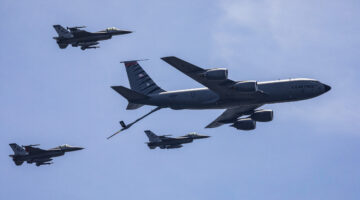
The Center for Strategic and Budgetary Assessments' Greg Malandrino argues in this op-ed that a fight with China will require CCAs for defense as well as offense.

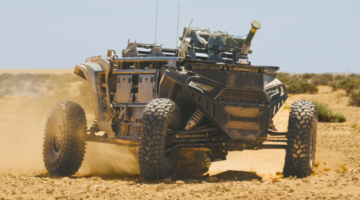
One commander, many robots: Fully autonomous ground vehicles are reshaping the battlefield.
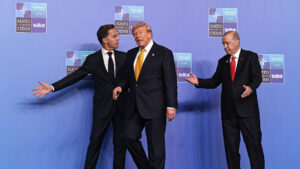
“It is critically important for us in this time, a time of not living in peace time ... that both in words and deeds to not make any steps to create an image that would indicate to Moscow or Beijing that NATO is not united or focused on deterring threats growing on our borders,” Marko Mihkelson told Breaking Defense.

From AI integration to the economics of air and missile defense, Chinese military commentators are paying especially close attention to the US-Israel war in Iran.

“There's, you know, a review or sort of relook at the employment guidance, which is more about the commander of STRATCOM and his responsibilities and [the defense] secretary's authorities, etcetera,” said Undersecretary of Defense for Policy Elbridge Colby.
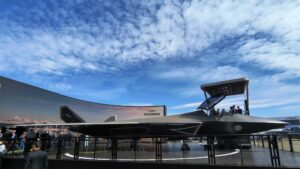
Lorenzo Mariani said the sixth-gen fighter could enter service two years ahead of its 2035 target date, but only if some requirements for the "initial version" were altered.

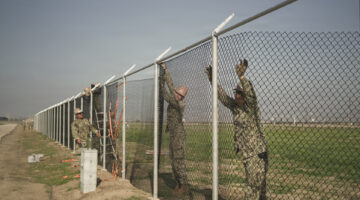
Traditional thinking about how to protect facilities must adapt to new threats such as drones or downstream attacks.
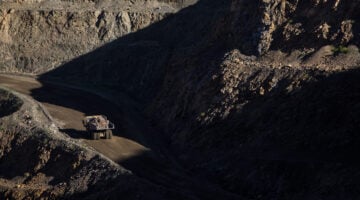
Establishing durable domestic mineral supply chains will likely require closer coordination between US defense primes as well as small businesses and new entrants, says Abigail Hunter.

The current demand signal for US air power abroad is not sustainable without significantly growing the force, argues Rep. Sheri Biggs, R-S.C.
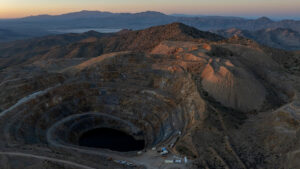
A new executive order essentially gives companies until the start of 2027 to alter their supply of critical materials and minerals. Industry is worried that could be a difficult lift.

Three Chinese rocket bodies have exploded over the last four years, creating dangerous debris that "will linger for decades to centuries, potentially colliding with other space objects," LeoLabs study author Darren McKnight told Breaking Defense.