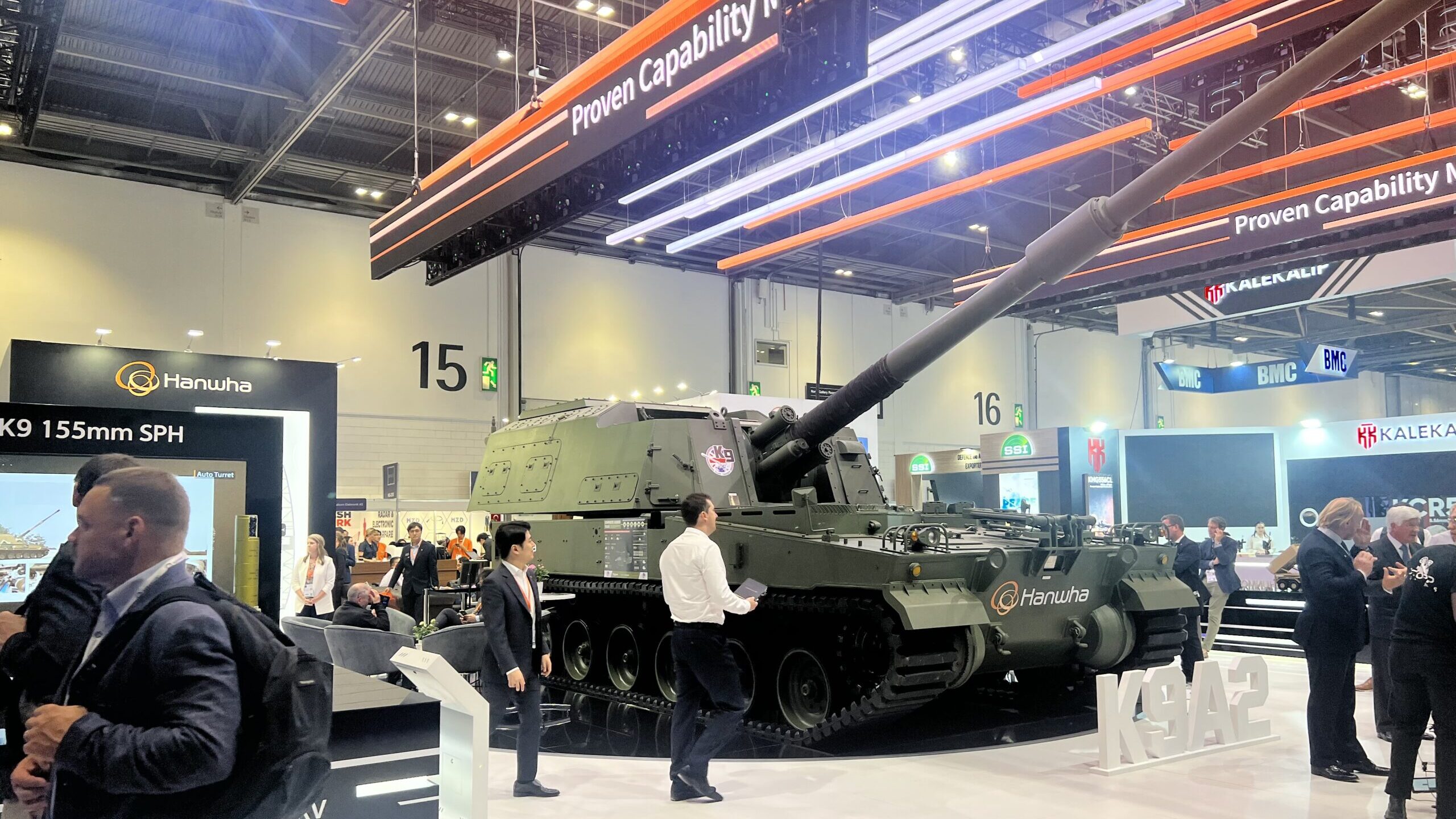
Hanwha sets sights on Army’s tracked howitzer program after victory in wheeled competition
A Hanwha executive told reporters the company plans to offer its K9A1 or K9A2 tracked howitzers for the competition.
A Hanwha executive told reporters the company plans to offer its K9A1 or K9A2 tracked howitzers for the competition.
The new solicitation comes weeks after the Army awarded Hanwha Defense USA a deal up to $233 million to deliver wheeled K9 mobile howitzer prototypes.


"Being able to tell the commander you don't need to do something is actually a pretty powerful message, as well."
Today’s decision comes after decades of fits and starts to find a new mobile howitzer, including the ill-fated Crusader, Non-Line-of-Sight Cannon and Extended Range Cannon Artillery.

“The agreement is part of Hanwha Aerospace’s strategy to strengthen its position in the Middle East, where it is pursuing local production, maintenance and technology partnerships as a route to regional customers,” Hanwha said in the statement.
Bulgaria, The Netherlands, Sweden, Japan, Egypt, Poland, Vietnam, Portugal and Syria were first-time participants.

The new artillery system is fully automatic and capable of firing at a rate of 6-8 rounds per minute, up to 40km in distance.


Architecture that linked sensors, C2, RF effects, and lasers into a distributed c-UAS kill chain.

Beijing did not take the announcement well, saying the offer of the arms package "grossly violates the one-China principle," undermines stability in the region and "sends a gravely wrong signal to 'Taiwan independence' separatists forces."

The document, dated Oct. 20, and marked as controlled unclassified information, sheds additional light onto the Army's plans to host a new competition.

After a long pause, the US Army is back on track in its search for new long-range artillery.

“[We’re] empowering our generals to take on that risk where we have the right to repair so that they can make these very small parts to get things back on and get them back into the hands of our soldiers," Secretary Driscoll said.

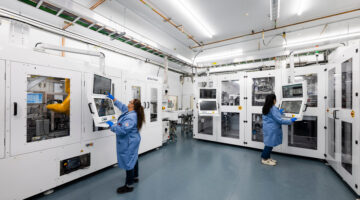
Lithium-metal batteries are one way to break the weight and endurance limits of today’s unmanned systems.

A day after the service unveiled a massive shake up, a two-star general’s email sheds light on additional ground combat vehicle cuts and plans to accelerate work on a Bradley replacement and future Abrams tank.

The new pairing is targeting an annual revenue “north of” $1 billion by 2027, says Matthew Warnick, the American Rheinmetall Vehicles managing director.
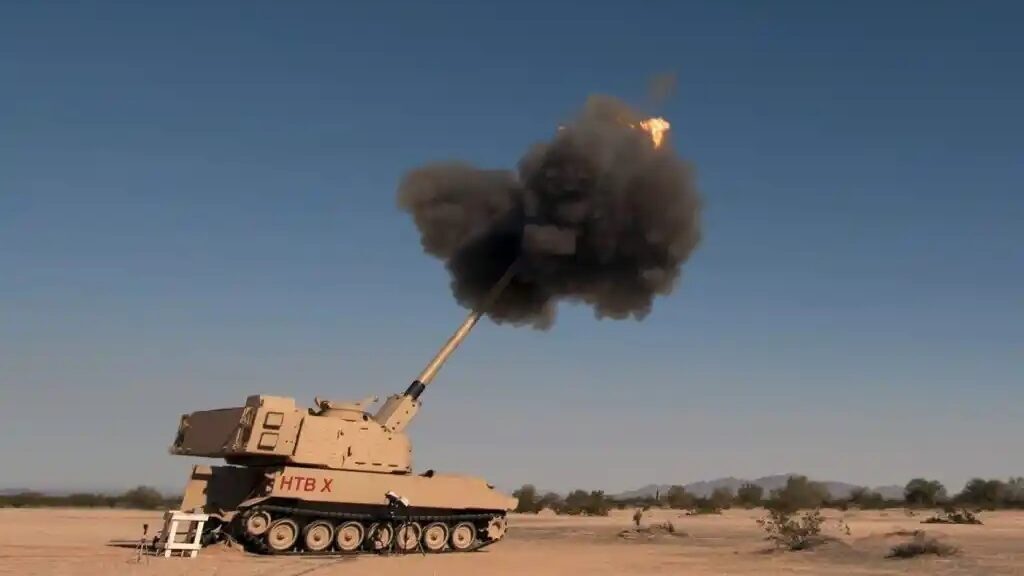
“Hopefully some time next year [the Army will know] whether we can go straight to procuring those things, or if we need to do development,” said Army acquisition head Doug Bush.

The restart will involve BAE Systems UK and US-based supply chain, and first deliveries are expected in 2025.