Some final sights of the Farnborough Airshow
As Breaking Defense wraps up our time in Farnborough, here are some of our favorite photos.
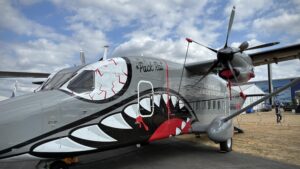
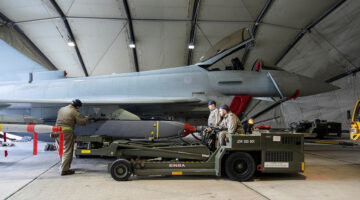
More aircraft from day 2 of the Farnborough International Airshow.
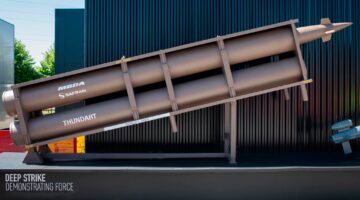
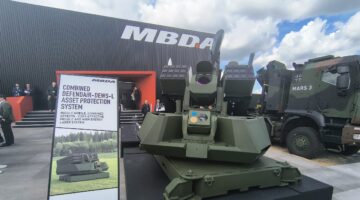
Displayed in a truck mounted configuration at the show, the new MBDA weapon is an upgrade to the company's ground-launched, Advanced Short Range Air-to-Air Missile (ASRAAM) and can also be integrated on unmanned ground vehicles or unmanned surface vessels.
In a special video program, Breaking Defense walks you through the past, present and future of Germany's burgeoning defense market.
During his time at MBDA, Éric Béranger oversaw the firm’s major industrial ramp-up.
The coalition's flagship project will be centered around the Ukraine-developed Freyja, while a European industry group separately announced that exo-atmospheric interceptor project is now also in the works.
Separately, MBDA and Rheinmetall were selected to develop a laser weapon system for the German Navy.
In a joint statement, the 12-member coalition linked the move to America's shifting stance in European defense.
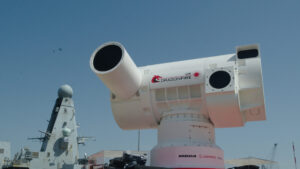
Based on a 2027 target, the UK is set to become the first European NATO nation to operationally deploy novel, laser directed energy technology.
The move effectively knocks out other competitors to replace France's current LRU arsenal, including a recent surprise bid by Lockheed Martin.
The European missile house says that the hybrid platform, which could enter service with Germany before the end of the decade, has been designed to address the “growing challenge of small, fast, and low-cost unmanned aerial threats.”
While company representatives were tight-lipped about the exact technical details of their offering, they explained that a flexible, software-based system would allow individual member-nations to connect their sensors to another nation’s command nodes.
The first flight milestone comes four years later than originally planned, after an initial delay caused by technical troubles.
One expert predicts car companies will be open to defense production “at least as long as substantial funding remains available — especially from the EU, but also potentially from private actors.”