Army photo

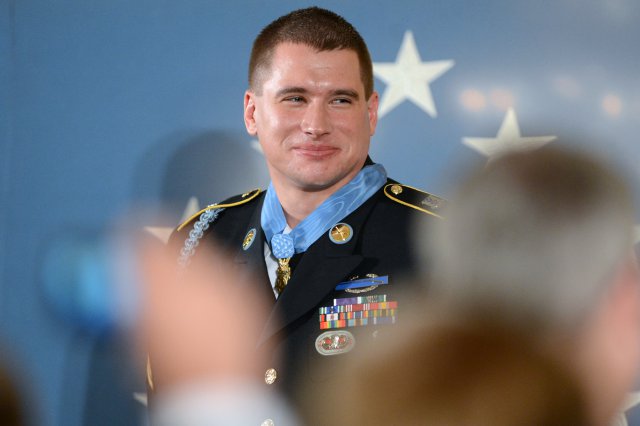
Army sergeant and Medal of Honor recipient Kyle White.

Budget battles between the Army and what would become the Air Force date back to the court-martial of Billy Mitchell in 1925. In the late 1990s the two services hurled imprecations, arguments and doctrine at each other as they fought over a shrinking pool of money, a situation not unlike what we face today. Those stresses are resurfacing, albeit with much less rancor and far greater understanding of how important fighting alongside the other services is. But that money pot is still shrinking and budget battles truly are zero-sum games.

Air Force photo

Court-martial of Army Air Service Brig. Gen. Billy Mitchell.

That’s an important part of the context for both this essay, by Association of the US Army president Gordon Sullivan — a retired Army Chief of Staff — and an earlier op-ed by retired Air Force Lt. Gen. David Deptula and Doug Birkey of the Mitchell Institute for Aerospace Studies, an offshoot of the Air Force Association. Both articles respond to the bold statement by the Army’s chief futurist, Lt. Gen. H.R. McMaster, that “we are outranged and outgunned by many potential adversaries,” McMaster said, “[and] our army in the future risks being too small to secure the nation.” The Army Chief of Staff, Gen. Mark Milley, largely concurred with McMaster’s dire assessment. But Deptula and Birkey warned against “parochial budget posturing” and pledged the Air Force and other services would always help the Army out (provided they were properly funded, of course). Now Gen. Sullivan steps in to say that the Army’s soldiers are willing to fight and able to win — but it may take more time and casualties in the future if we shortchange Army budgets now. read on. The Editor.

Gen. Gordon Sullivan

Gen. Gordon Sullivan

These are dangerous times for the U.S. Army, but it would be a tragedy if the increasingly frantic warnings about having a smaller and underfunded force left anyone thinking America’s soldiers are weak or unwilling to fight.

It’s true that an Army of less than one million Total Force soldiers (active, reserve, and Guard) is too small given the expanding demands for deployed and forward-stationed troops, increasing risks to national security as well as the chance of casualties among our ranks.


It’s true the consequences of 15 years of war, followed by dramatically constrained budgets, have seriously degraded readiness. Only about one-third of the Army is fully combat ready today, far less than the 70 percent readiness required to meet demands of combatant commanders.

It’s also true, as Lt. Gen. H.R. McMaster recently warned Congress, that the Army faces the possibility of being outranged and outgunned in future conflicts because the pace of our weapons modernization has slowed to a trickle.

Lt. Gen. H.R. McMaster

Lt. Gen. H.R. McMaster

These are worrisome problems demanding immediate attention, but I’m concerned the calls to fix what is ailing the Army might be wrongly received as a message that our soldiers are losing their willingness to fight.

America’s soldiers are not quitters. These are not men and women who stay home unless the playing conditions are just right. When they are called upon—and a quick look at the globe makes it clear we are talking about when, and not if—they’ll be in it to win it.

How do I know this? Because the Army is full of examples of soldiers who don’t quit. Army Capt. Florent A. Groberg was awarded the Medal of Honor in November for the courage and valor he showed in Afghanistan while heading a security detail in 2012. He put himself between a suicide bomber and the people he was guarding, and he repeatedly pushed the bomber away from group and onto the ground. The bomb went off, throwing Capt. Groberg 20 feet through the air, knocking him unconscious and severely wounding him. When his comrades rushed to his aid, he was on the road with his pistol drawn, ready to continue the mission.

Sgt. Kyle J. White received a Medal of Honor for the selfless bravery he displayed in Afghanistan in 2007, when he and his 13-member team were ambushed. Injured and knocked unconscious early in the attack, White regained consciousness to find a situation where the team was pinned down by menacing fire from above, and with several teammates severely wounded. He recalls thinking, “It’s just a matter of time before I’m dead.  If that’s going to happen, I might as well help someone while I can.” And so he did.

The 20-year-old, who had been in the Army for only 21 months, dragged comrades to safety and provided medical attention. And he exposed himself to enemy fire again when he took a radio from a fallen soldier to call in airstrikes on enemy positions so survivors could be evacuated. Six members of the team died, but White’s extraordinary, dogged and selfless actions are a display of true soldier grit.

It is soldiers we are thinking of when worrying about the undermanned, under-ready and underfunded Army we’ve created by allowing a dysfunctional federal budget process to determine national security posture. We need to correct the mistake we’ve made in letting the budget, rather than real-world realities, decide our best defense.

We are also making mistakes that threaten the continued success of the all-volunteer force. We’ve created a situation where soldiers live and work in buildings that are decades behind on maintenance, where they aren’t getting enough training, and where they know they’ll have to wait for much-needed improvements in weapons and equipment. On top of this, many soldiers and their families—as well as members of the other services and their families—question the federal government’s commitment to their well-being and quality of life as a result of an extended attempt to save money by reforming military compensation and benefits such as health care and housing.

I’m fully aware that when I raise concerns about the dangerous downward trend I see in the Army, I’m adding to some of the anxiety. I worry the trend line will change only when we face imminent and grave danger.

Our current generation of soldiers is made of the same stuff as their ancestors. An inscription on the granite base of a Civil War monument in Sharpsburg, Md., marking the single-most lethal day in Army history at the Battle of Antietam, explains what makes soldiers tick. It says: “Not for themselves but for their country.”

We have time to act. We must acknowledge that by fielding an Army shaped by budget constraints, we create a situation where wars may last longer, and casualties may be higher, because we won’t have the decisive edge that has been part of our nation’s military doctrine since the end of Cold War. Our nation deserves better, and so do our soldiers.

I know they will do everything they are asked to do. I fear they will suffer losses they should not. They deserve better.

Comments

  • Robert Warner

    Restart the draft – for everyone, including Trump’s children.

    • Chandler Record

      yes. bringing back the draft would be a good thing. It make our country great again. there is to much good things to say about the draft

      • David James

        keeps the society intact and on the same page, we would not take war so lightly if everyone had the potential of being involved.

        • Steve Wolf Cole

          The problem is that the draft did not include everyone. There were deferments for the wealthy and the well connected. There was preferential placement for the well connected who chose to serve. Draft boards were used as political weapons. Draftees are not the best soldiers. Unless the draft/military service can be made truly universal for all citizens, I doubt it’s value.

    • minutemanIII

      I do not think the army wants draftees anymore.

      • Robert Warner

        Just wait.

  • JohnFornaro

    Control wasteful spending, because you can’t control Congress.

    • herbloke

      They would have to start with an honest audit which DOD have yet to produce.

      • JohnFornaro

        No question about that. I think that the reason DoD won’t produce that audit is similar to the reason that the Fed won’t produce its audit: The corporate minders have put profit before accomplishment. If we lose the next war, it won’t be for want of a penny. It will be for want of a potent and affordable force.

  • originalone

    After 15 years of war, expanded demand for deployed and forward stationed troops, upgrading slows to a trickle, and the beat goes on. The courage of the American fighting member isn’t in question, but the procurement system in the DoD certainly is. Turning a blind eye to the financing of the Military as has been done-on the back of future generations, is the culprit or the bull in the china shop. Until there is a serious effort to control and change to present course, chaos will be in the forefront of any modernization.

  • Don Bacon

    “our army in the future risks being too small to secure the nation”
    How so? Canada and Mexico are quite friendly. Meanwhile there is less capacity to invade and occupy other countries in losing campaigns, which is a good thing.

    • Ztev Konrad

      Looking back at all the big operations, there was all the planning in the world for getting there ( and if over the beach, getting the first 30miles), and then nothing.
      3 weeks after the invasion all good, 3 months , nothing.

  • NavySubNuke

    If the army hadn’t wasted numerous years and tens of billions of dollars this wouldn’t even be a conversation right now. Instead we have the failed comanache program, the failed future combat system and the failed land warrior program.
    Unless/until the army can show it has learned its lessons from those debacles there is no point in wasting more money on them.

  • Tom

    The pool of defense dollars is not shrinking, it is near record highs. Its just not growing as fast. However, equipment numbers are shrinking due to relentless greed in the Pentagon and its corporate allies.

    • JohnFornaro

      Thank you. Until Congress and the AF leadership tell the simple truth about funding, they only deceive themselves.

  • PolicyWonk

    Given the severity of the budgetary problems the army (and other service branches) is (are) facing, one *might* ask: why don’t we take a serious, and I mean SERIOUS look at acquisition reform?

    Instead, all we get is: “give us all the money we want and don’t pay any attention to where or what its being spent on”, or God help us, “the Russkies, terrorists, Chinese, and Bollywoggles will take over the nation”…

    Its enough to give one “the vapors”.

    A brief look at recent history says that our armed forces have a severe problem when it comes down to buying weapons systems and spending money honestly. Examples include: FCS (Army), Comanche (Army), F-35 (USAF, Marines, Navy), the so-called and fraudulently named “Littoral Combat Ship” (Navy), while the USAF wants to (dishonestly) retire the most effective ground attack/CAS platform ever devised by man, only to replace it with a hyper-expensive aircraft that only if we’re lucky won’t be obsolete the day its truly ready for combat, and a host of other disasters that have wasted taxpayer dollars. Add to this:
    – Redundancy (research programs, special editions of everything whether warranted or not, etc.)
    – Waste
    – Changing requirements for weapons/systems, all the way from inception through manufacturing or construction – often with as of yet un-invented/unobtanium-plated gizmos.
    – Cost-plus (a relic of WW2).
    – A lack of coherent purchasing strategy
    – A lack of understanding of the threats, or the force structure and weapons required to defeat them

    Our nation wastes an *appalling* amount of money, and the taxpayers easily get the lousiest deal for defense dollar spent in the western world. But these guys (and the HoR’s, and defense industry), all seem to like the system the way it is. And this is because its as corrupt as the day is long – and they all have their hands out.

    US national security isn’t their concern – otherwise during bad economic times this would’ve been a priority: to make the best of every dollar spent. Instead, one acquisition disaster after another, and then we hear about waste on a staggering scale for horrifyingly lavish living quarters for high-level officers posted in Afghanistan, buildings that are never used, and roads falling apart immediately after completion, or in the case of showering facilities in Iraq – our soldiers being electrocuted. These, among many other disasters imposed on the taxpayers.

    Disgusting.

    The entire stinking system should be extirpated and replaced by a system similar to that used by the British – and short of that – put the whole thing under receivership. If the armed forces can’t be trusted to devise strategy, force structure, or purchase weapons that deliver value – then take that responsibility away from them.

    • leroy

      ” …the USAF wants to (dishonestly) retire the most effective ground attack/CAS platform ever devised by man …”.

      Interesting that the AF will be stationing five A-10s at Clark AFB in the Phillipines. The A-10 is also vital in the fight against ISIS. Why the AF tried to get rid of them is beyond me. They must remain flying!

      • herbloke

        Ahem, Leroy, he already stated why. Money and manpower is being sucked from other programs to purchase your favorite flying machine. Not sure what 5 Hogs will do in the PI though, most likely just for show.

        • leroy

          They can have both F-35 and A-10. What are they talking – saving $4B by getting rid of the Warthog? Chump change. I don’t buy that the AF can’t find the money.

          BTW – where in this story did he blame the F-35?

          As far as putting them in the Philippines goes, makes me wonder if they are going to assist in helping fight Islamic rebels over there. I hope not.

          • herbloke

            It’s not only money but also maintainers. They are stripping the Hogs of its minders. He mentions the F-35 as one of the programs that was at fault amongst others. They should just give them the durn things.

          • JohnFornaro

            “Fatal flaws within the cockpit of the US military’s most
            expensive fighter jet ever are causing further problems with the
            Pentagon’s dubious F-35 program.”

            http://www.stopthef35.com/pentagon-f-35-wont-have-a-chance-in-real-combat/

            If the F-35 is unflyable, the AF will be able to launch nothing but hot air attacks.

          • herbloke

            Yea, I glanced thru one report and the commonality thing jumps out at ya. 25% commonality for the three variants. Basically three different airframes instead of one like they promised.

          • Uniform223

            Its not so much that they “can’t find they money”. They have the money and funds given to them under Defense Budget. They just don’t have as much as they would like. They would rather spend the money on future programs like LRS-B, SACM, F-35, ADVENT, ect.

            I agree with you that it (definitely) seems like they’re going to assist in fighting separatist rebels/insurgents/terrorists there. If the Spartly Islands are such an area of tension wouldn’t aircraft with maritime capability be better?

      • JohnFornaro

        Absolutely. We need swarms of A-10’s. We probably need a handful more SR-71’s, for that matter.

      • PolicyWonk

        The A-10 in the Philippines? Considering that they’ve got legs, are heavily armed/armored, are (comparatively) cheap to run, and can loiter: if we’re looking to send a message to a trouble maker by calling in big gun air support in a compact package, the A-10 might be just the way to send that kind of message.

        The USAF has been notoriously disingenuous with its arguments to rid itself of the A-10, to the point of blatant lying (that editorial in USA today was a whopper – the people that wrote and/or authorized the publishing of that piece should’ve been demoted and/or given BCD’s for dishonoring the service). The A-10 was slated for the chopping block before Desert Storm – but its stunning performance in the Gulf War shamed them into keeping it.

        One day that plane will have to be retired, that is clear. But for the USAF to pretend that they can do the same job as well (or as economically) with any other platform we have in the inventory when there is no replacement in the works is asinine. Pretending that we’d have A-10’s flying down in the dirt supporting our soldiers in an environment where we haven’t got air superiority is asinine.

        Maybe the best way to handle the problem is to break up the USAF altogether: put the space contingent into its own service branch, and everything else back under the auspices of the Army.

        • leroy

          Thankfully the AF said the A-10 stays, but when I read that SecDef was going to station aircraft in the Philippines, I was expecting P-3s, or P-8s to surveil the SCS. But he said A-10s. Hmmm. A-10s aren’t used for maritime patrol. But they are used to fight insurgencies. Does that mean we are going to get involved in air support for the Philippine Army against their Muslim insurgency? Inevitably it seems when that happens our troops always somehow seem to follow. I hope not. But this concerns me:

          “The Pentagon said the U.S. forces that will remain in the Philippines are already participating in the Balikatan, or shoulder-to-shoulder combat exercises, that will end Friday. About 200 airmen, including special operations forces, will remain at Clark Air Base, along with three of their Pave Hawk attack helicopters, an MC-130H Combat Talon II special mission aircraft and five A-10 combat aircraft.”

          http://www.navytimes.com/story/military/2016/04/14/us-reveals-joint-patrols-south-china-sea-philippines/83020786/

          Hopefully these aircraft will be there to protect our 5 new airbases, but maybe there’s more coming. Regardless, more proof that the AF does seem to rely heavily on the Warthog.

          • Uniform223

            “How many SOCOM operators will be left there?”

            OPSEC… you don’t need to know and so does anyone else.

            This seems more like a COIN type operation than anything else… to me. This would also heavily bolster US and Philippine Defense relations.

          • leroy

            Thanks, I know, it was more a rhetorical question because I hope we aren’t going to be getting directly involved in another COIN operation – fighting, not just advising – in the Philippines. Our Spec Ops forces are already over-tasked IMO. And I don’t think the American people would support it. But China isn’t going to like those planes there, and I wouldn’t doubt that they’d arm Filipino rebels to attack our personnel going over there. That might mean we get proactive. But how much?

          • Spruance42

            Or the A-10 could be used to hit entrenched ground targets on a neighboring island….

      • Uniform223

        “Why the AF tried to get rid of them is beyond me.”

        Because they’re getting old and there are other aircraft that can do the job just as adequately as well as being able to do more? In mean time if you have it… why not use it.

    • JohnFornaro

      I summarized the problems far more succinctly, but you have given a much better list of the problem areas. Still, it is Congress who supports the waste, and the Executive which involves us in elective war for false reasons.

    • David James

      I agree acquisition reform is desperately needed and should be pursued in two areas:

      1) Politics —aka buy from MY district–don’t close MY base etc its just a pony show for these guys to throw there weight around and see how much “They can get” at everyone’s expense. This is why we have unkillable projects like the F-35 which throw money around to all the powerful districts even though it makes the project itself more complex and expensive.

      2) The revolving door of military to defense contractors.

      We have so many embarrassing examples of this so often it makes me sick, in any sane system it would be considered treasonous.

      We have generals convincing congress to keep terrible programs going then retiring to said the company the next year…and this is excepted behavior. (How can we ever trust there sincerity under this system?)

      Our whole governing system has turned into a huge lobby system where money=power and influence but votes mean very little.

      Thus weapon systems are basing are lobbied for an chosen by those they personally benefit not becasue they because they are the best choice for our military/country.

      The corruption has spread like a cancer through all branches of our government and society, reform is the only answer.

      Acquisition reform and in the larger picture campaign finance reform.

    • Steve Wolf Cole

      The real problem is not the military, but Congress. There is a long history of the military being forced to buy systems manufactured in Senator’s and Congressmen’s home towns or states because they want to keep people employed, not because it’s what is needed by the military. The A-10 is a good example. This aging aircraft is being forced upon the Airforce. Modernization can’t happen when you are forced to spend your budget maintaining old airframes so that money can be sent to someone’s favored voters.

      • PolicyWonk

        This is exactly why congress needs to be taken out of the picture for everything except approval of the budget – and further gives reason to why this nation needs to completely overhaul defense acquisition.

  • Joe smith

    This is nothing but stupid pandering for bigger budgets. There is no reasonable case to be made for why we need a huge ground force unless we are planning on more perpetual wars.

    The army is better off becoming a leaner and meaner force.

    • David James

      Perhaps but there is an argument being made that the money we are spending is going almost exclusively to aviation assets.

      (We have stealth fighters supporting armored vehicles our grand parents used.)

      I think It is a fair argument about the allocation of the current budget.

  • vegass04 .

    I don’t think valor will make much of a deference if we are outgunned and out numbered. But let’s get back to the true question in matter. How the hell could a 90 billion $ military budget, 180 million people country that’s on the verge of collapse, outgunn and out number us?? If that’s the case, the whole Pentagon should resign and we should start all over again since obviously we’re doing something wrong.

  • Secundius

    Yeah No DEFERMENTS, or Proxy Fighters like they had in 1863. “The Rich Mans War, The Poor Man Fight’s” Act WAR. Where you paid Someone Else $300.00 to Fight In Your Place…