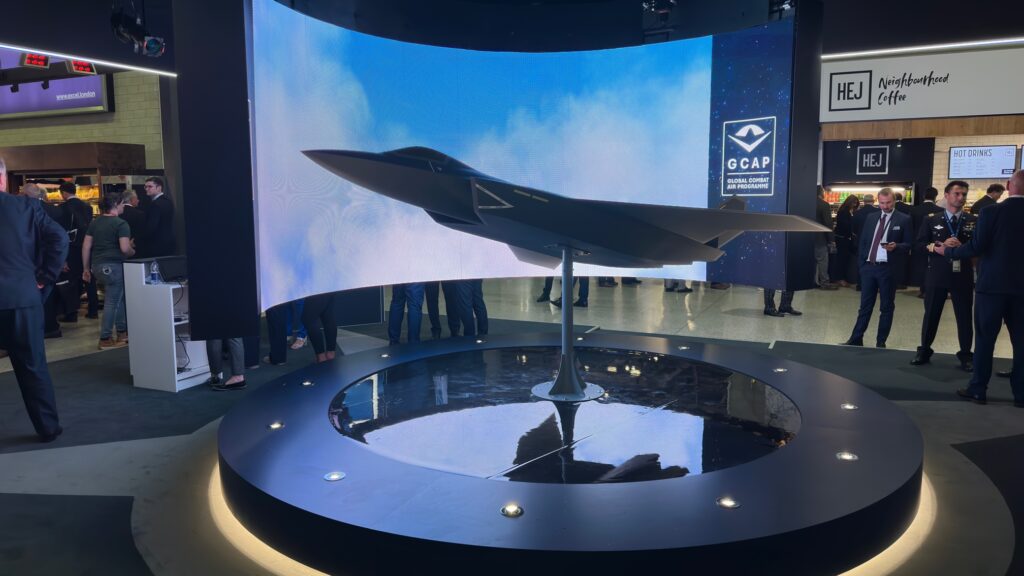
BELFAST — The UK says a sixth-generation fighter contract is to be signed in a matter of weeks, in line with bilateral talks held over the weekend between Prime Minister Keir Starmer and Japanese premier Sanae Takaichi.
The flagship project of the Global Combat Air Programme (GCAP) between Italy, Japan and the UK has faced uncertainty amid infighting between the British Ministry of Defence and the Treasury (UK budget office), which has, in collaboration with Starmer, struggled to address a budget shortfall. The inking of the fighter contract could help relieve GCAP partner concerns however.
“During the meeting [in London], the Prime Ministers are expected to confirm their shared commitment to the Global Combat Air Programme, and discuss the launch of the next phase of the international programme, including through the international contract that will be signed by the end of the month,” the UK Prime Minister’s Office said in a Saturday statement.
Italy, Japan and the UK, are committed to the future fighter effort, with a timeframe of 2035 marked as the sixth-generation type’s entry to service. However, Tokyo reportedly raised eyebrows at the UK holding up funding for an existing £686 million ($905 million) design and development contract.
The “fragility” of GCAP centers around UK financing and the project’s operational timeline as Japan “desperately needs something for 2035,” said Paul Taylor, senior visiting fellow at the Belgian-based, European Policy Centre think tank.
“Japan is facing what they consider a significant Chinese threat, so they have the most skin in this game” of the three GCAP partners, while “funding of UK defense investments is in flux.”
Former British defense secretary John Healey resigned last week, arguing that a lack of sufficient funding in the long delayed Defence Investment Plan (DIP) could endanger UK security. His departure was followed hours later by Al Carns, former UK armed forces minister.

Localizing tactical communications for sovereign, NATO-ready C3I
Beyond foreign sales, Rafael’s model enables tech transfer, local engineering, and is a template for NATO partners.
Healey said he resigned after Starmer was only prepared to offer £13.5 billion to prevent an £18 billion gap related to defense acquisitions, partly funded by cutting other departments’ budgets by 1 percent. Healey had also pressed Starmer to commit 3 percent GDP to military spending by 2030, but was presented with a plan that targeted a figure of 2.68 percent, according to the BBC. The sum would be far below NATO’s 3.5 percent core defense spending push.
“There is an enduring mismatch between the UK wanting to exert leadership in NATO on defense” and its available resources, said Taylor. Britain is leading with France on the coalition of the willing for Ukraine, and leading alongside Paris on a security force to stabilize the Strait of Hormuz after a ceasefire is reached.
“We [British] may soon have to put our money where our mouth is there, but where’s the money?” Taylor explained.
Reports have also said that in a bid to keep tighter control of finances, the Treasury is due to bring GCAP funding in-house, taking such power away from the MoD in the process.
Asked for comment on the matter, a UK MoD spokesperson told Breaking Defense today, “The Prime Minister’s Office said on June 13 that the [GCAP] international contract will be signed by the end of the month.”
Taylor said that if the Treasury was to move ahead with the plan, it would be “an extraordinary vote of no confidence in the MoD’s ability to manage large projects.”
Starmer has said that the DIP will be published before the NATO Summit in Ankara next month. It is expected that the document will outline whether the UK will take forward a proposal to acquire a fleet of F-35A fifth-generation fighter jets capable of carrying nuclear weapons, alongside additional GCAP details.
In light of Leonardo CEO Lorenzo Mariani suggesting that Germany would be welcome to join GCAP in the aftermath of Berlin abandoning the rival Future Combat Air System (FCAS) future fighter effort, Taylor noted that the industry leader’s comments have been met with a “thunderous silence from the UK, which thinks of itself … as the leader” of GCAP.
“Why would they welcome extra partners? They pretty much agreed on the work share so far, so they don’t want to cede top of the range high added value work share to an additional partner,” added Taylor. Taylor said it appears Mariani recognizes that “Germany would be a partner that could bring in … reliable money, and he probably sees that there isn’t enough money there at the moment.”
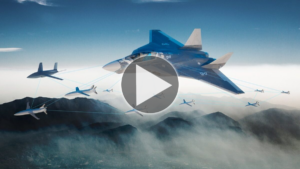
The sixth-generation fighter project is designed to replace British and Italian Eurofighter Typhoons, as well as Japanese F-2 multi-role planes. Beyond the combat aircraft, a large portion of the GCAP project includes a family-of-systems approach, including unmanned platforms designed to fly alongside the new jet as drone wingmen.
UPDATED 6/16/2026 at 5:33am ET to include comments from a defense analyst.
Breaking Defense Video