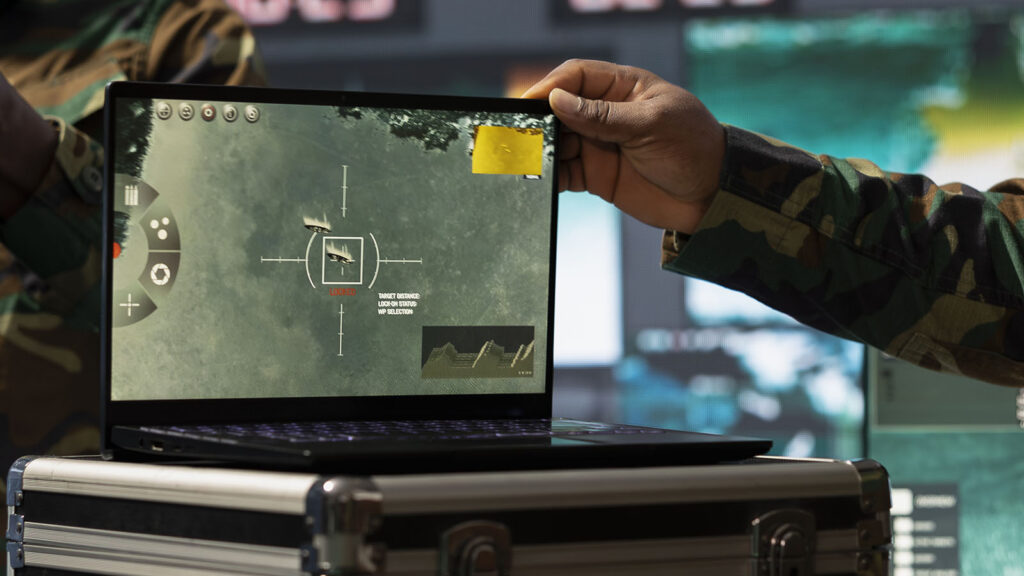
WASHINGTON — The Army announced the establishment of a new operational facility, dubbed Reveille Forge, where service members, industry and academia can come together to integrate their products with existing government-owned equipment, namely those supporting integrated air and missile defense systems.
According to a Wednesday service release, the new testing facility, formally known as an Integrated Development Environment (IDE), piggy backs off the Army’s recent Operation Jail Break — a sprint concluded last month in which vendors partnered to open up the interfaces of legacy and new equipment with the goal of making them interoperable to share data and information. The Army is “institutionalizing that momentum” with the new IDE, the release said.
“Operation Jailbreak proved what’s possible when industry, government, and academia stop working in silos and start working as one team,” Lt. Gen. Frank Lozano, the Army’s Portfolio Acquisition Executive (PAE) for Fires, said in the release.
The new IDE also compliments the service’s Application Programming Interface (API) marketplace, which the Army stood up in May, the release stated. The API marketplace is a forum where industry can “securely” publish their interfaces for others to review, which “enables faster collaboration,” according to the Army.
Reveille Forge will be fully operated by PAE Fires out of Redstone Arsenal, in Alabama, the announcement stated, adding that the PAE will work with both new and existing interested vendors through “appropriate government-approved mechanisms.”
Further, the IDE will serve as a “permanent hackathon environment” and can operate on its own or be a part of future “jailbreak sprints,” the Army stated. (The service refers to such practices as “hackathons,” though what it really means is reworking or eliminating the manufacturer software restrictions on systems.)
The first step of integration within Reveille Forge is for vendors to demonstrate that their product can be interoperable within established government-owned platforms, though the Army did not specify which specific platforms it is interested in integrating. Next, the “capability review” stage begins where government stakeholders will have “formal capability discussions” to determine if the integration will coincide with an operational goal, according to the release.

AGVs vs. UGVs: A new class of ground autonomy takes the field
One commander, many robots: Fully autonomous ground vehicles are reshaping the battlefield.
Finally, official testing will take place where “[s]uccessful performance” may result in even more testing, acquisition decisions or “other government actions consistent with applicable laws, regulations, and competition requirements,” the release stated.
Jeannie Sommer, director of integrated fires within PAE Fires, explained in the release that the goal of the new IDE is to create a space where integration is one of the first steps in the development cycle.
“With Reveille Forge, system integration is the first thing we do, not the last,” she said. “If a vendor can prove their capability works inside our architecture, they earn a fast path to a capability review and testing, which may ultimately get new technology into Soldiers’ hands faster.”
Breaking Defense Video