WASHINGTON — The Army could award contracts for its high-profile Common Autonomous Multi-Domain Launcher (CAML) program next month, according to Lt. Gen. Frank Lozano, the service’s portfolio acquisition executive for Fires.
Lozano also announced that the Army is currently “negotiating a contract” with AeroVironment (AV) for the service’s Enduring-High Energy Laser (E-HEL) program, the Army’s first program of record for a new family of high-energy lasers designed to take down airborne threats, primarily drones.
“We’re actually just on the tail end of a number of demonstrations from vendors who are proposing the autonomous mobile platform […] and the munitions pallet capability, and a pitch on weapon system integration capability,” Lozano said of the CAML program during a Center for Strategic and International Studies event Tuesday. “We’ll probably look at making an award towards the end of the August timeframe.”
Such an award will come in the form of an Other Transaction Agreement, Lozano said, adding that there will be multiple to avoid vendor lock and associated issues.
“What I did not want to go do is just go to a single vendor to provide everything,” Lozano said. “That’s an option, that’s always an option that’s on the table, but sometimes that comes with some bad behaviors and baggage associated with vendor lock and certain IP [intellectual property] rights that I may want access to, even from an interface perspective, that may limit how I can mature the system in the future.”
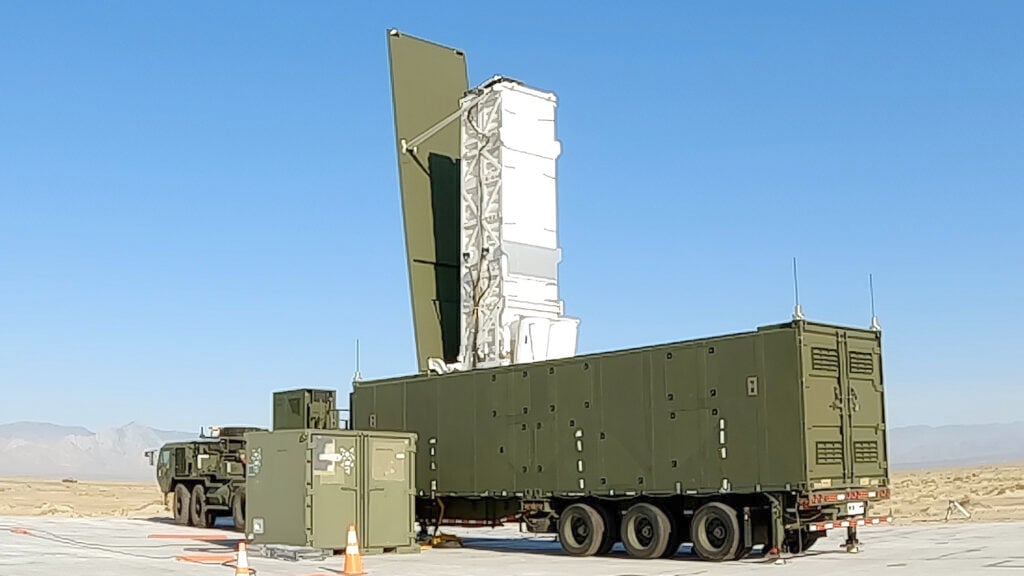
The CAML program is set to serve as a replacement for the Army’s Typhon — its Mid-Range Capability (MRC) long-range launcher — as the service discovered the Typhon was a bit too large to operate on the battlefield.
The new timeline puts the program a bit ahead of schedule compared to an end-of-year deadline another Army officer described to Breaking Defense in January. Lozano’s comments come after Breaking Defense previously reported the Army is looking for a medium variant and a heavy variant for the autonomous missile launcher, which would likely result in two contract awards. At the time, Lockheed Martin and Raytheon separately said they were vying for the competition, but did not disclose which size launcher they were looking to develop.


Biodefense is force protection: Ready today, prepared for tomorrow
A decorated combat aviator and biotech CEO advocates preparing for novel viral threats before the next crisis.
Breaking Defense later reported the Army is instead looking for three or four vendors, but Lozano did not mention how many vendors he was looking to award for the program on Tuesday.
Separately, Lozano revealed that the service is in negotiations to award AV a contract for its E-HEL program, a high energy laser system that can be mounted on various vehicles like Strykers, Joint Light Tactical Vehicles, Infantry Squad Vehicles and more. As Breaking Defense previously reported, the E-HEL project is seeking solutions to protect “semi fixed” and maneuver forces from Groups 1 through 3 drones, meaning small- to medium-sized.
“We’re negotiating a contract with AeroVironment right now for the enduring high energy laser system,” Lozano said Tuesday at the same CSIS event. “That has shown a lot of recent promise and capability out at White Sands Missile Range during multiple demonstrations.”
RELATED: Pentagon picks Lockheed, nLIGHT for laser defense projects
Though Lozano did not reveal the name of AV’s system or any other details of the potential contract, the Army issued a request for information late last year stating that it was looking to acquire 20 E-HEL systems, with an award expected to be “initiated” in the second quarter of fiscal year of 2026 “or later.”
Breaking Defense previously reported AV was competing in the E-HEL competition when the company earlier this year revealed its laser-powered LOCUST X3 counter-small unmanned aerial system platform aimed at taking down Groups 1 through 3 drone threats. AV declined to comment on Lozano’s comments on contract negotiations and declined to say that system the negotiations were for.
Ashley Roque contributed to this report.
Breaking Defense Video