Land Warfare

LaNeve ‘redesignates’ Army’s Futures and Concepts Command as new FASCOM autonomy command

The new US Army Futures and Autonomous Systems Command, "will pioneer operational concepts that harness autonomous capabilities across all warfighting functions," Gen. Christopher LaNeve said today.

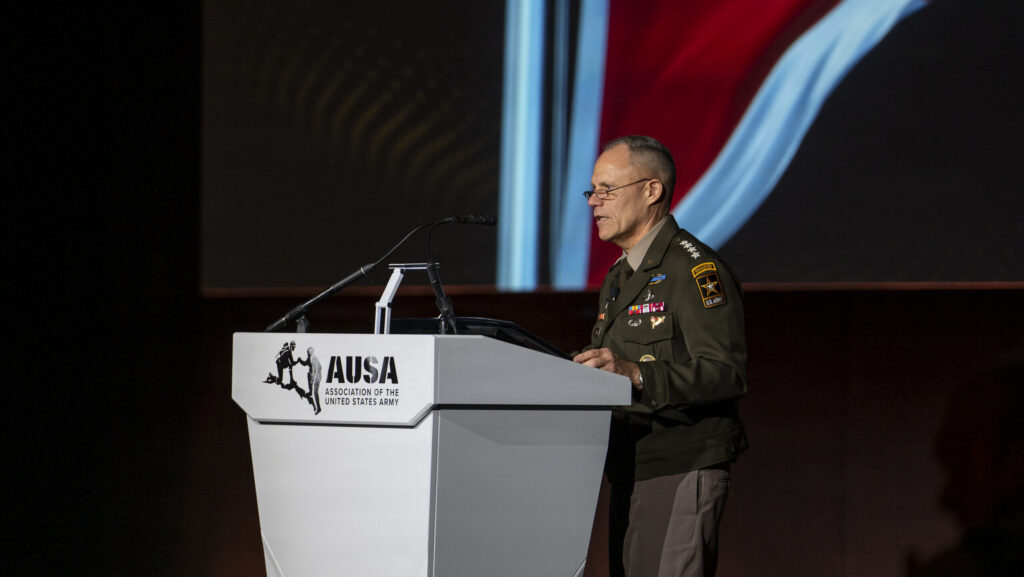
U.S. Army Vice Chief of Staff, Gen. Christopher LaNeve, speaks at the 2026 AUSA Annual Meeting and Exposition in Washington, D.C., Oct. 12, 2026. (U.S. Army photo by Staff Sgt. Alexander Nieves)

WASHINGTON — The Army’s top officer revealed today that the service has “redesignated” its Futures and Concepts Command (FCC) as the new Army Futures and Autonomous Systems Command (FASCOM).

“We are incorporating autonomous and unmanned systems at every single echelon across the formation … with the force structure to match … including introducing UAS [unmanned aerial systems] and robotics military specialties to integrate these technologies at the point of need,” Acting Chief of Staff Gen. Christopher LaNeve said at the annual AUSA conference. 

“With [Secretary of Defense Pete Hegseth’s] announcement establishing Autonomous Warfare Command, Acting Secretary [Adam] Telle and I have redesignated Futures and Concepts Command to serve as US Army Futures and Autonomous Systems Command … FASCOM,” he said.

Earlier this month the Army announced the establishment of FASCOM along with a handful of other related organizational changes, but at the time did not note FCC’s role. LaNeve didn’t specifically say why Army leaders decided to make the move, but he said it signals that the service is “moving with focus and intention.” 

“[As] Acting Secretary Telle likes to say, we are gaining velocity,” he added. 

LaNeve said in a press release prior to his remarks today that FASCOM will be led by a three-star general officer. It will “integrate and ultimately accelerate” the work of the Combat Capabilities Development Command, Medical Research and Development Command, 75th Innovation Command, Joint Modernization Command and the Transformation Decision Analysis Center, he said. 

On Sept. 30 Defense Secretary Pete Hegseth announced the Pentagon would create a new four-star command, called Autonomous Warfare Command (AUTOWARCOM), centered on drones and similar technology as well as a new working group on the future of defense.  

Today’s move makes the FCC a short-lived organization, at least in name. It was activated at the beginning of this year by then-Secretary Dan Driscoll as a subordinate command under the service’s four-star Transformation and Training Command, or T2COM. 

T2COM was established as a result of the service’s sprawling Army Transformation Initiative, which aimed to bolster the service’s modernization and consolidate some of the service’s leadership. It combined the service’s two four-star commands, Training and Doctrine Command and Army Futures Command. 

“This goes beyond drones,” LaNeve said in the release today. “FASCOM will pioneer operational concepts that harness autonomous capabilities across all warfighting functions.”

PHOTOS: AUSA 2026

PHOTOS: AUSA 2026

Attendees file in during the first day of the 2026 Association of the US Army annual conference in Washington, DC, on October 12, 2026. (Breaking Defense)
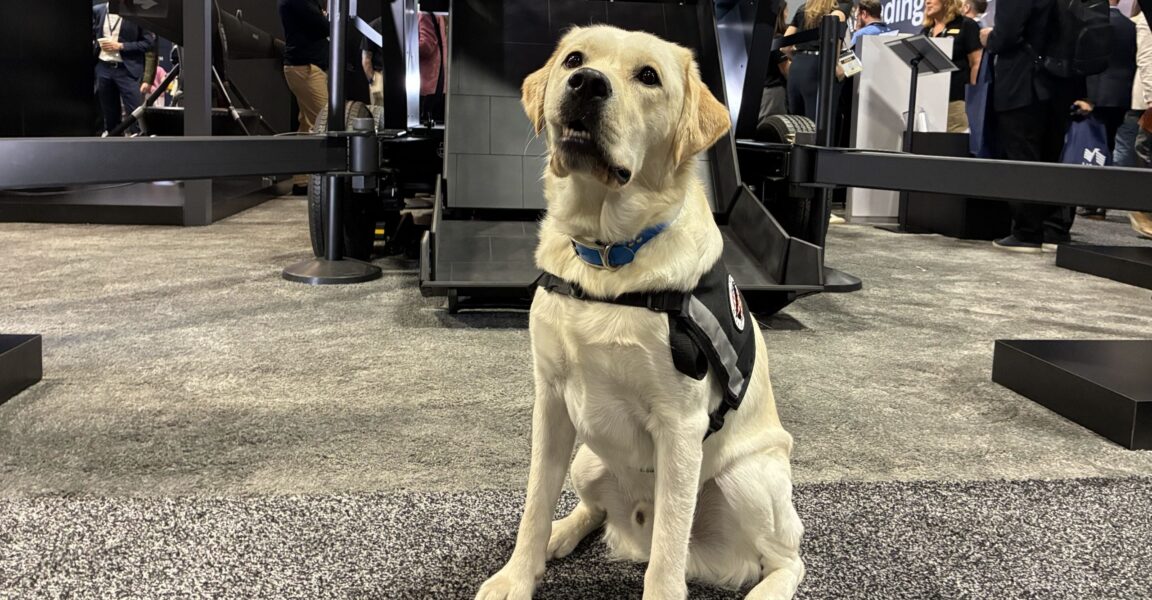
Patriot, who is expected to go to a wounded veteran when the dog’s training finishes, is happy to greet attendees outside the Shield AI booth on the show floor. (Breaking Defense)
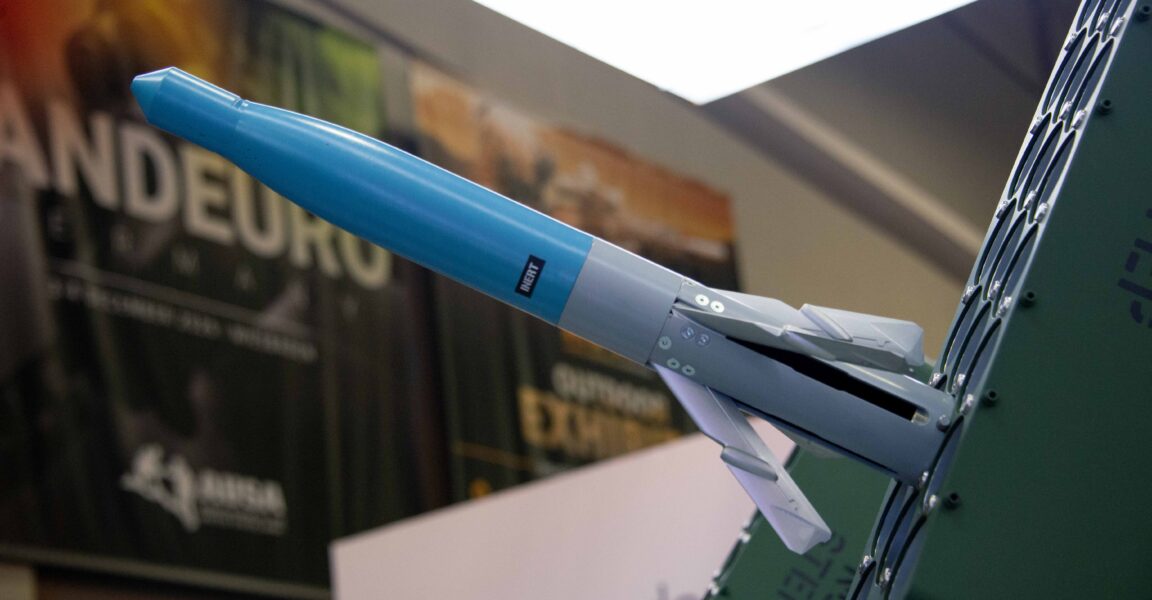
A close-up look at a munition from Sierra Nevada's Brawlr (Battery Revolving Advanced Weapons Launcher Reconfigurable) air-defense system, as seen at the 2026 AUSA conference. (Breaking Defense)
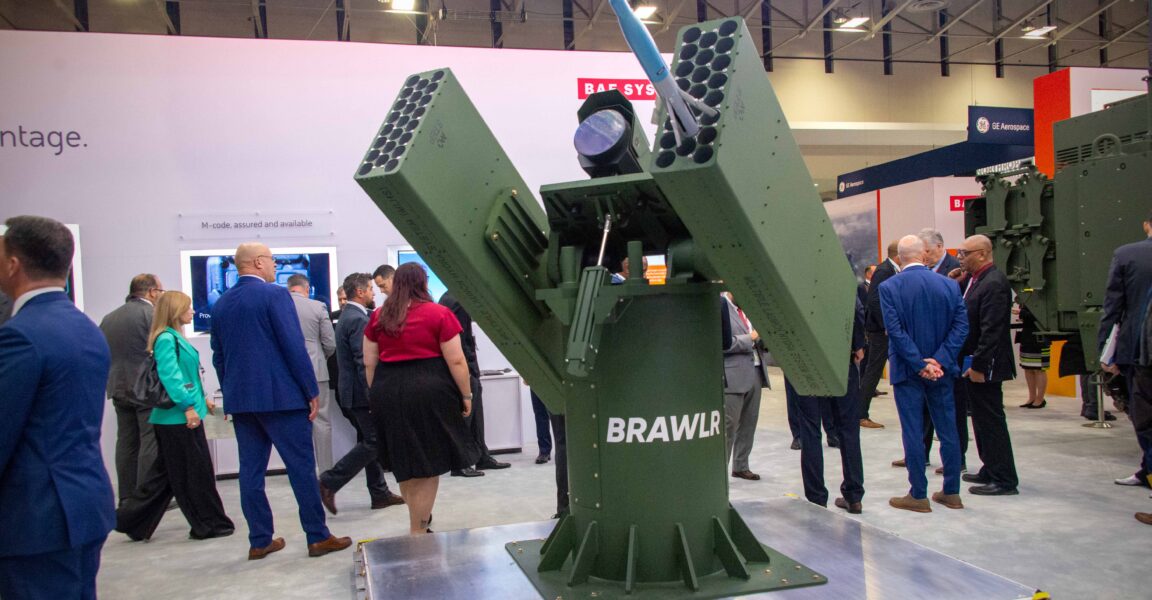
A wider shot of Sierra Nevada's Brawlr air-defense system at the 2026 AUSA conference. (Breaking Defense)
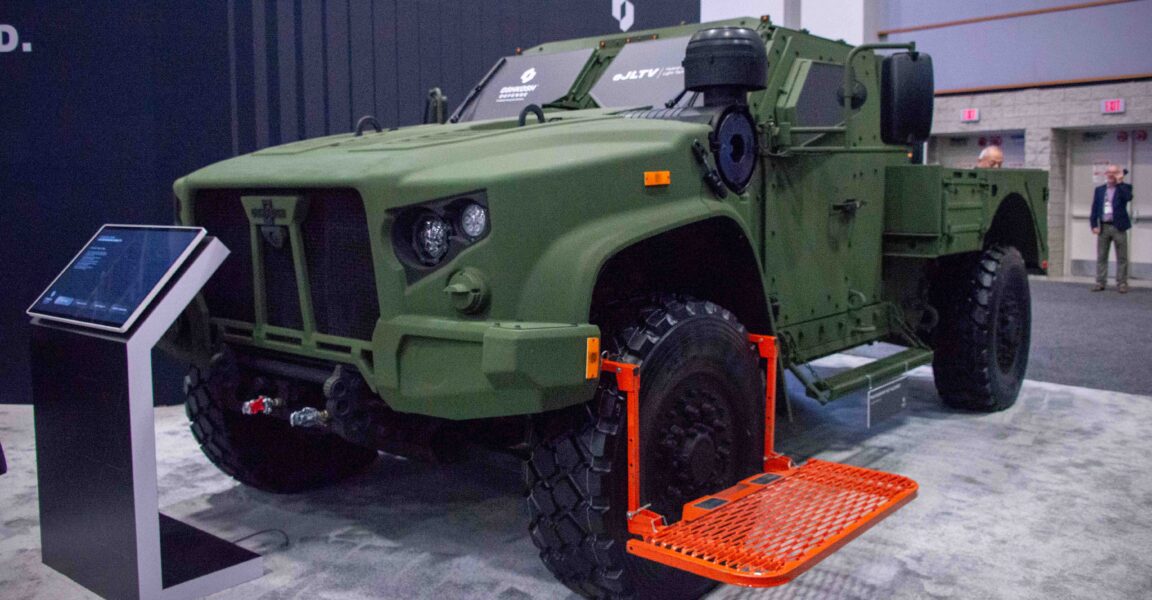
Oshkosh's electric Joint Light Tactical Vehicle on the AUSA show floor Oct. 12, 2026. (Breaking Defense)
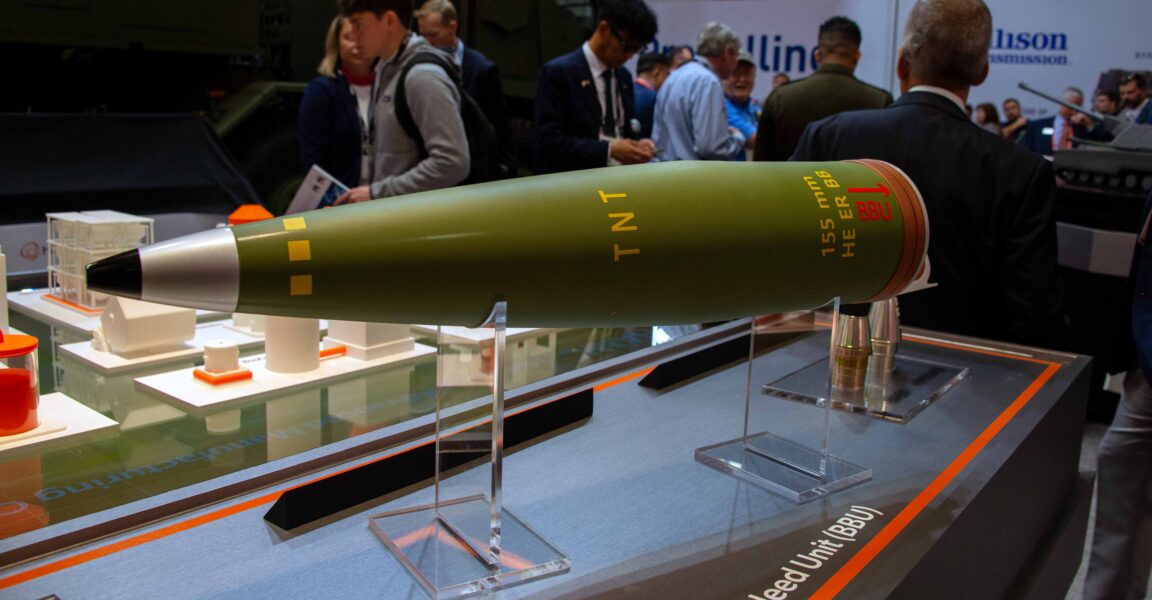
Hanwha Defense USA showed off its 155 mm artillery shells at the 2026 AUSA expo. (Breaking Defense)
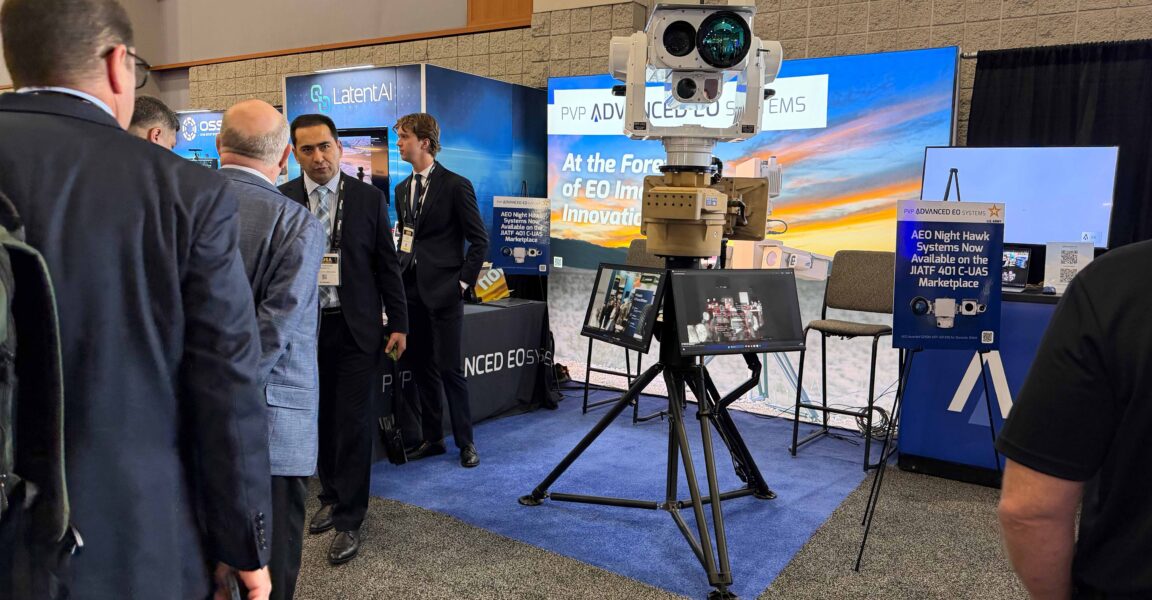
AEO Night Hawk Systems displayed their surveillance assembly, with sensors honing in on bystanders at the 2026 AUSA conference in Washington. (Breaking Defense)
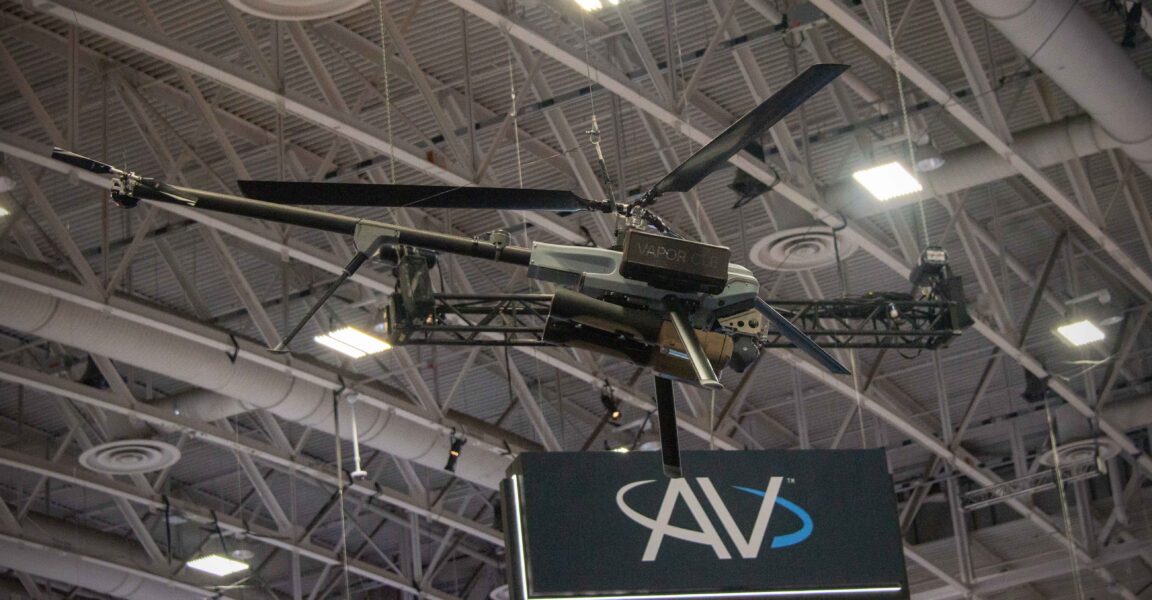
AeroVironment’s VAPOR is an all-electric, single-rotor vertical takeoff and landing (VTOL) helicopter unmanned aircraft system. Here it is suspended above attendees at the 2026 AUSA conference. (Breaking Defense)
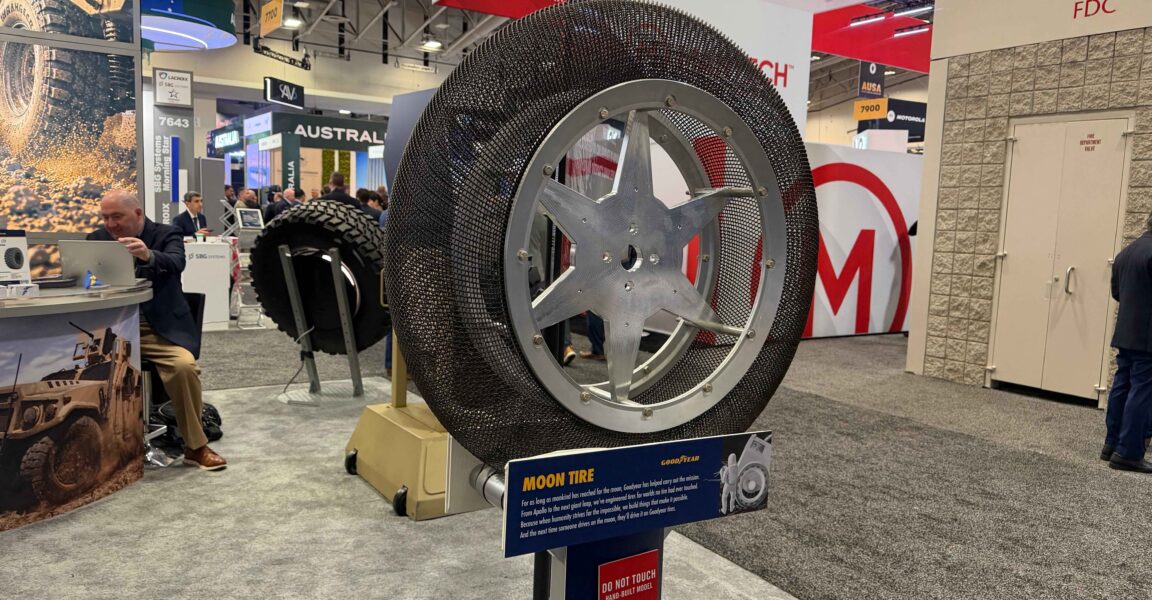
Goodyear representatives brought a sturdy but very unusual "moon tire" for lunar exploration to the 2026 AUSA expo. (Breaking Defense)
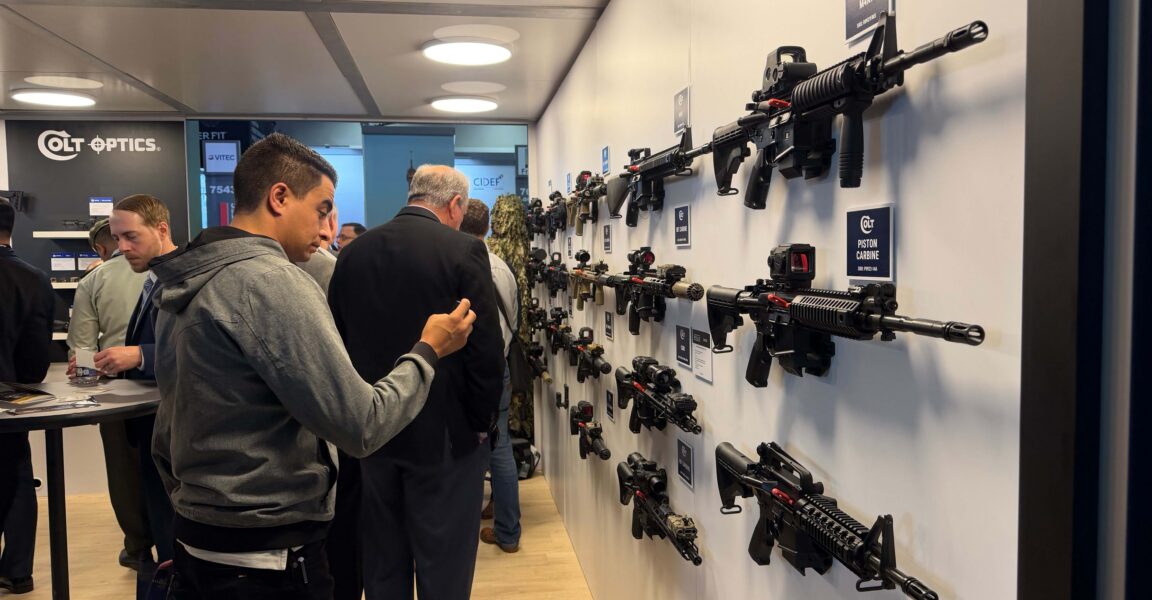
Colt optics had one of the busiest displays, with dozens of attendees observing a wall of assault rifles with specialized optics at the 2026 AUSA expo. (Breaking Defense)
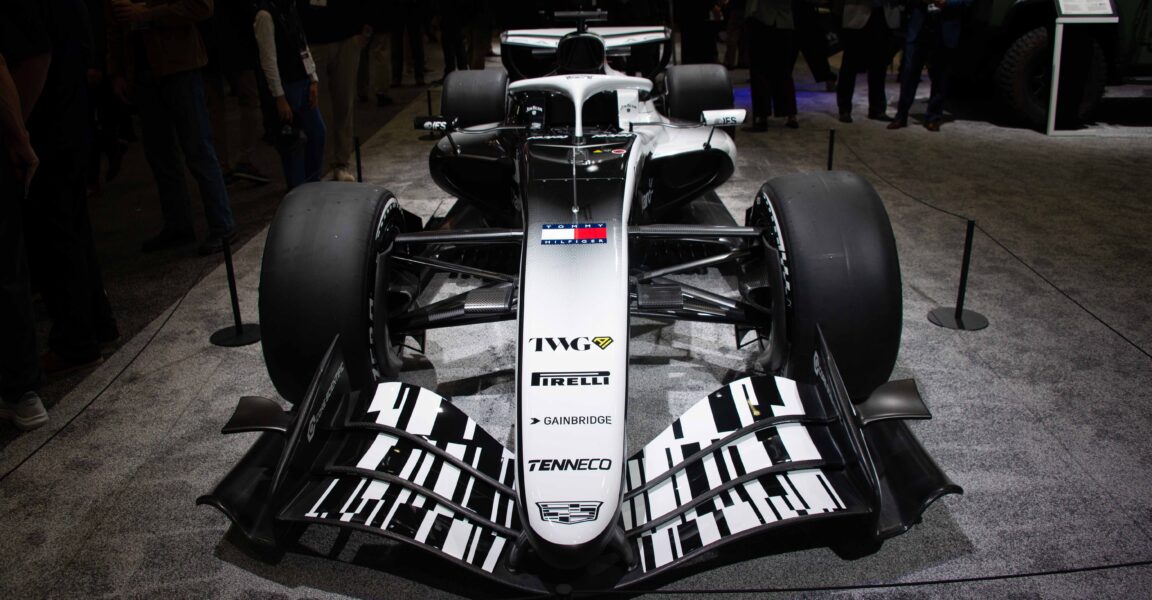
Cadillac brought its Formula 1 team racecar to the 2026 AUSA conference in Washington. (Breaking Defense)
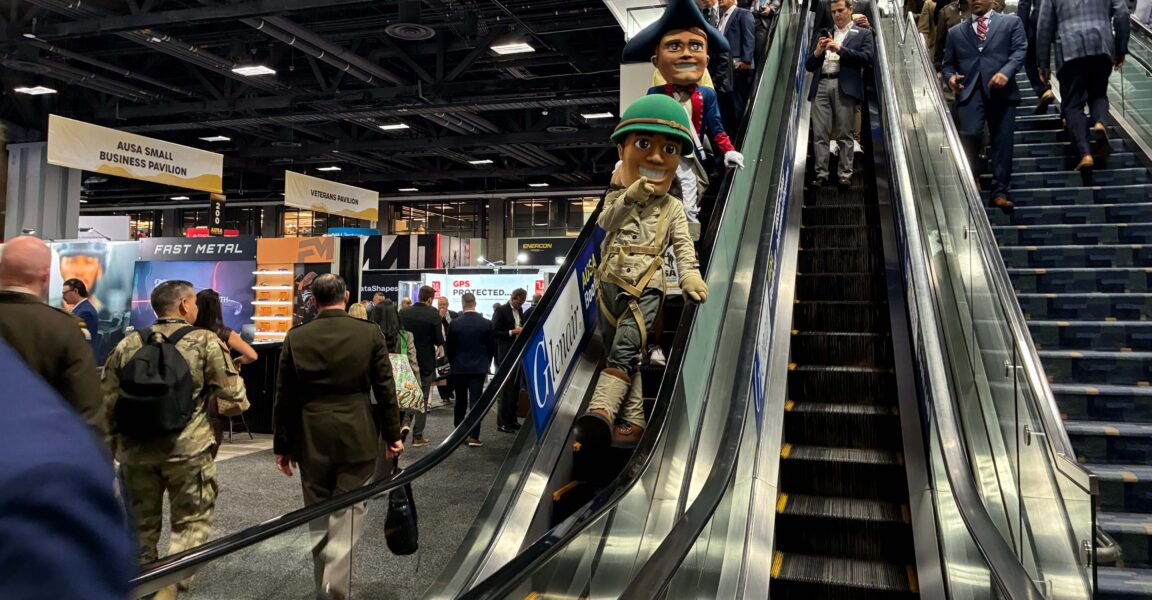
AUSA mascots Sgt. Hero and George Washington descend the escalator at the 2026 annual conference. (Aaron Mehta / Breaking Defense)
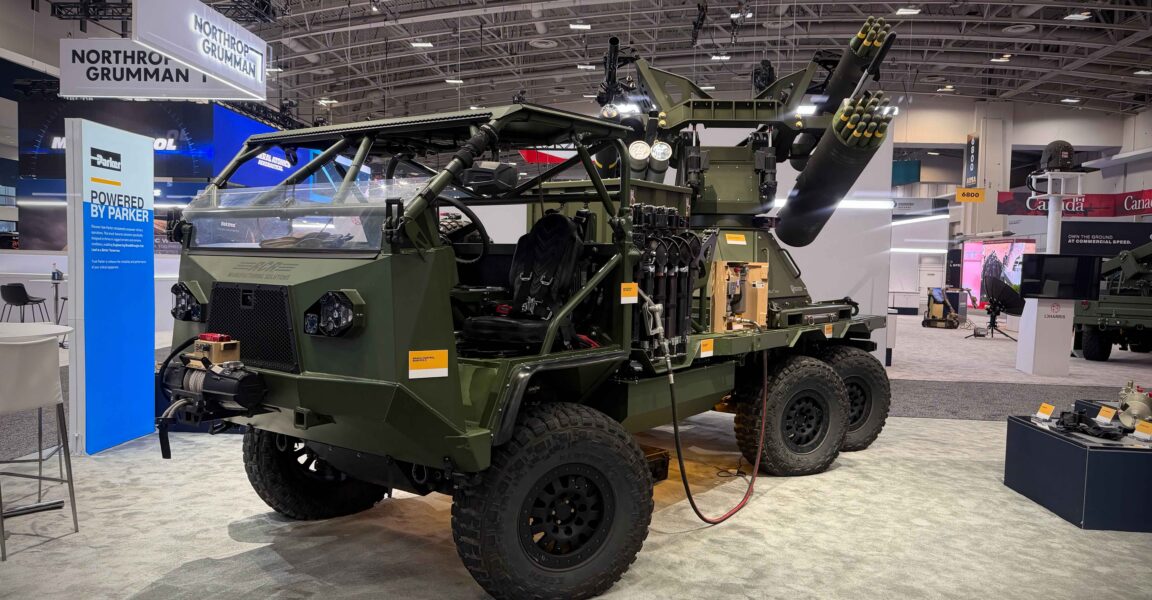
Parker Hannifin showcased many of its components onboard the MDH Strategic Services Airwolf c-UAS system, which is shown here fixed atop the RCR 6WAP vehicle. (Breaking Defense)
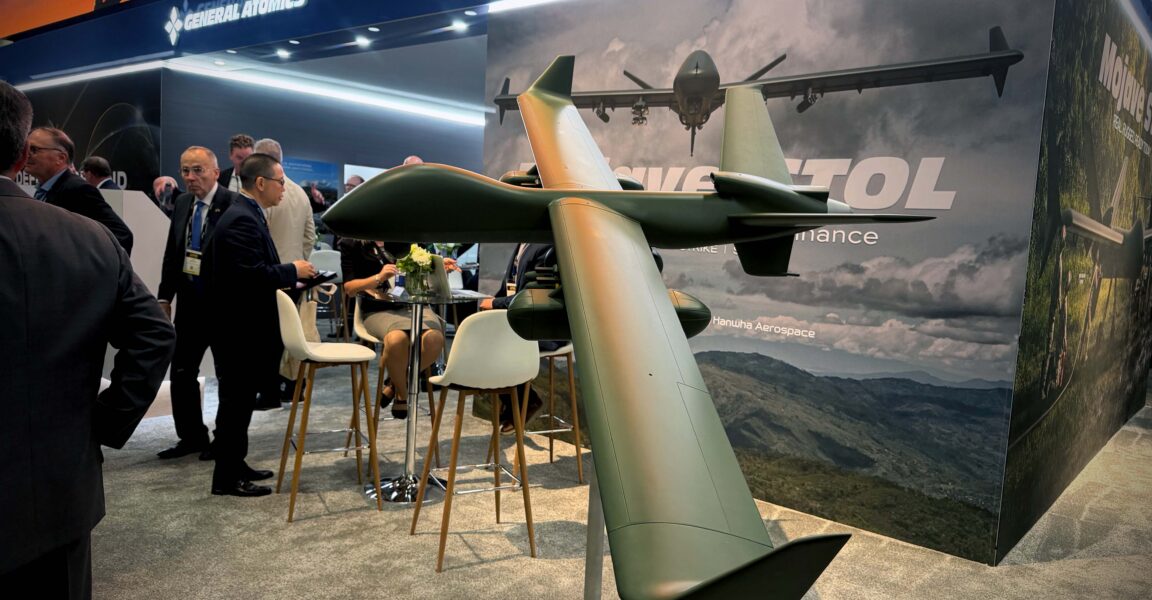
General Atomics Aeronautical Systems Inc. and Hanwha Aerospace co-developed the Mojave short takeoff and landing (STOL) uncrewed aircraft, pictured here at the 2026 AUSA trade show. (Breaking Defense)
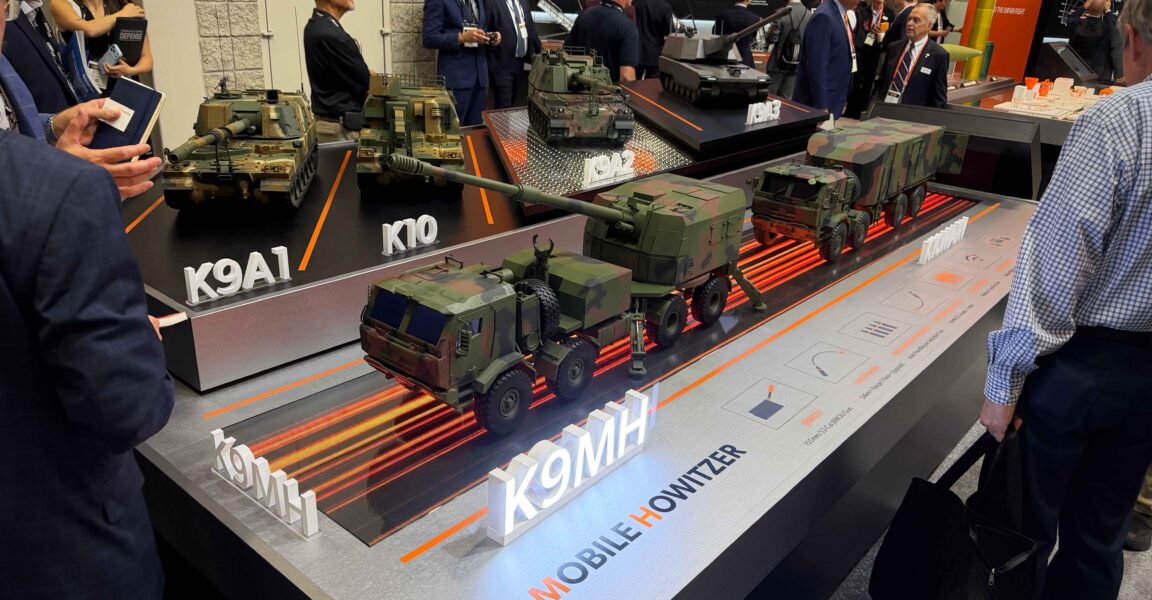
Hanwha Defense USA displayed a range of scale model armor and artillery systems on the AUSA show floor. (Breaking Defense)
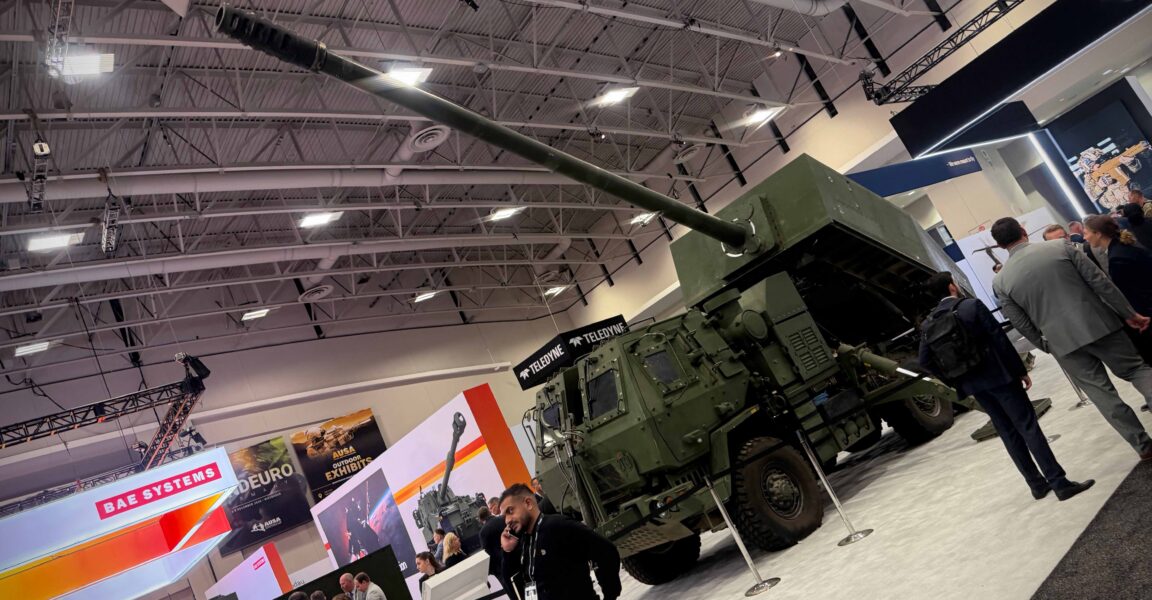
BAE’s Multi-Domain Artillery Cannon System stands tall at the 2026 AUSA trade show in Washington, DC. (Breaking Defense)
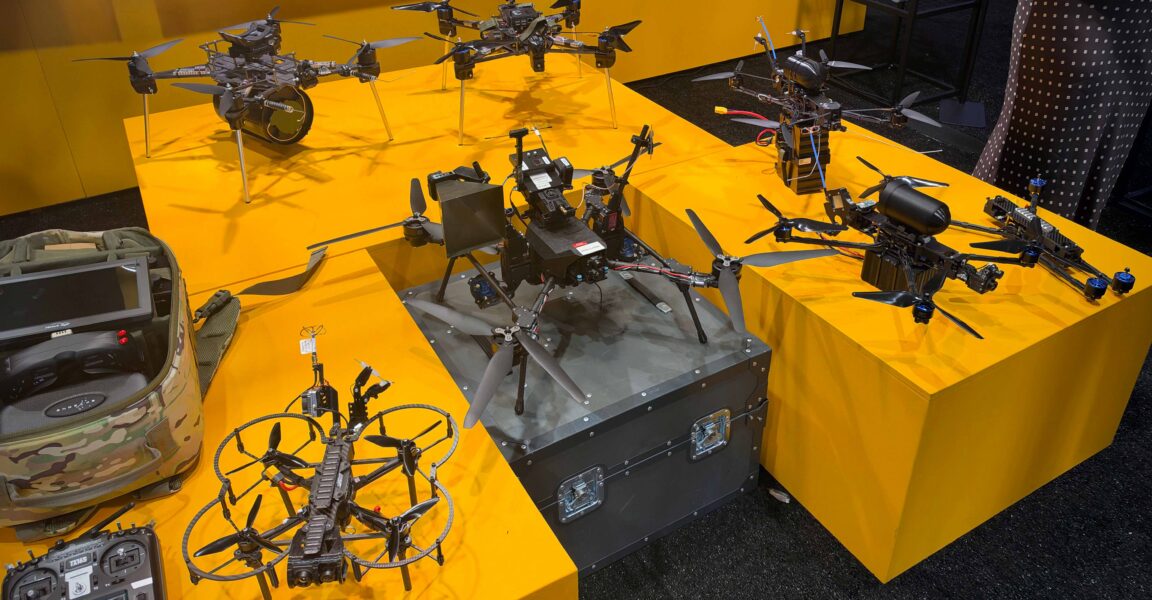
The Ukrainian military’s 3rd Army Corps brought a variety of small drones to the 2026 AUSA trade show. (Valerie Insinna / Breaking Defense)
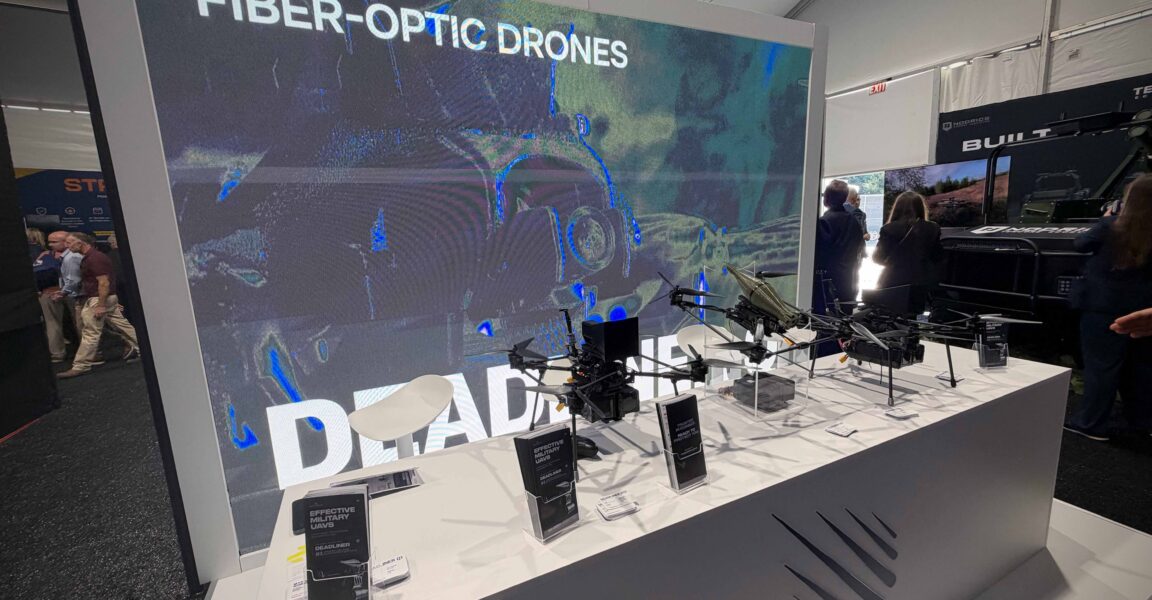
Kyiv-based defense tech firm Stellarion brought several fiber-optic drones to the 2026 AUSA expo. (Valerie Insinna / Breaking Defense)
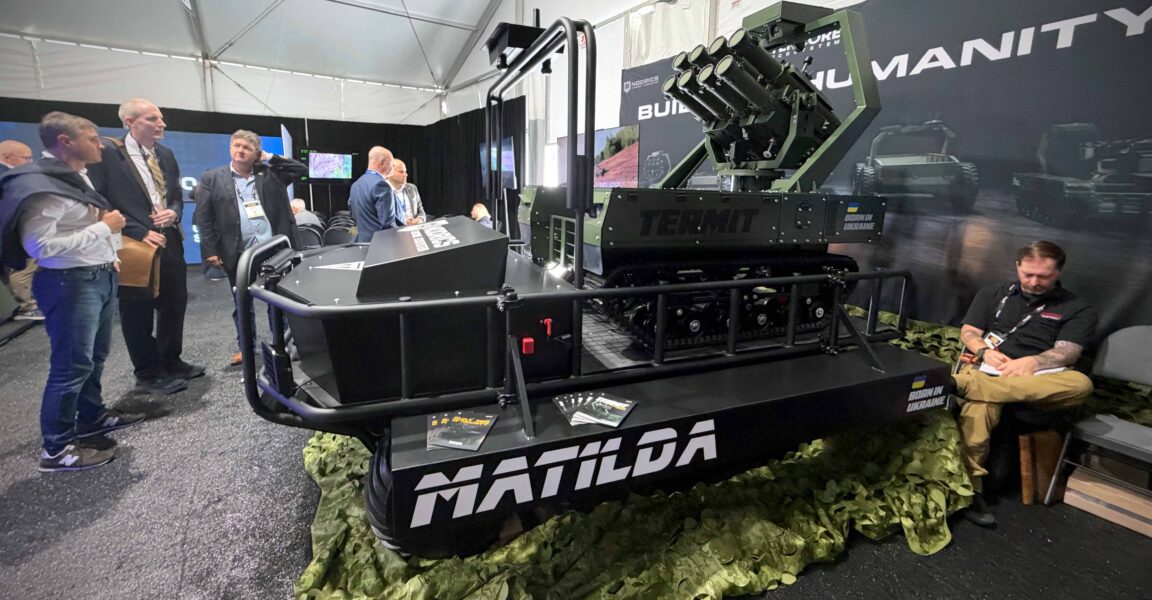
Ukrainian defense firm Tencore showcased an amphibious unmanned ground vehicle called MAT1LDA (Mesa Associates’ Tactical Integrated Light-Force Deployment Assembly), which is carrying Tencore’s TerMIT ground robot, at the 2026 AUSA trade show. (Valerie Insinna / Breaking Defense)
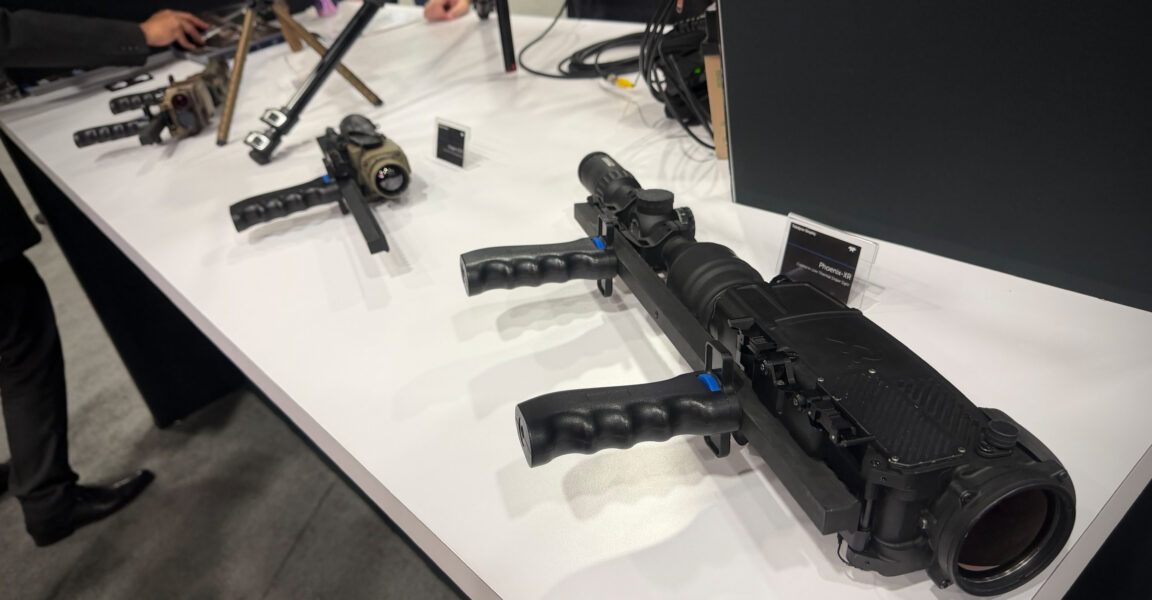
Teledyne Qioptiq brought several thermal weapons sights including the Phoenix-XR (right) and the Dragon-C12 S (middle) to the 2026 AUSA conference. (Breaking Defense)
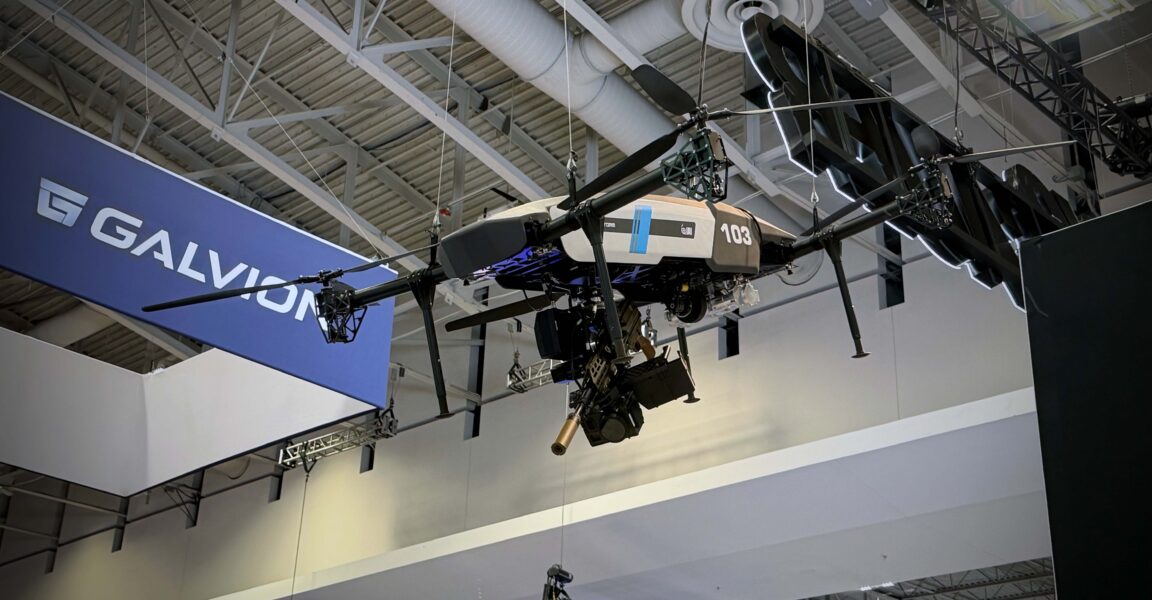
Israel Aerospace Industries’ and Sig Sauer’s Fire Storm 250 armed tactical quadcopter hangs above attendees of the conference. (Breaking Defense)
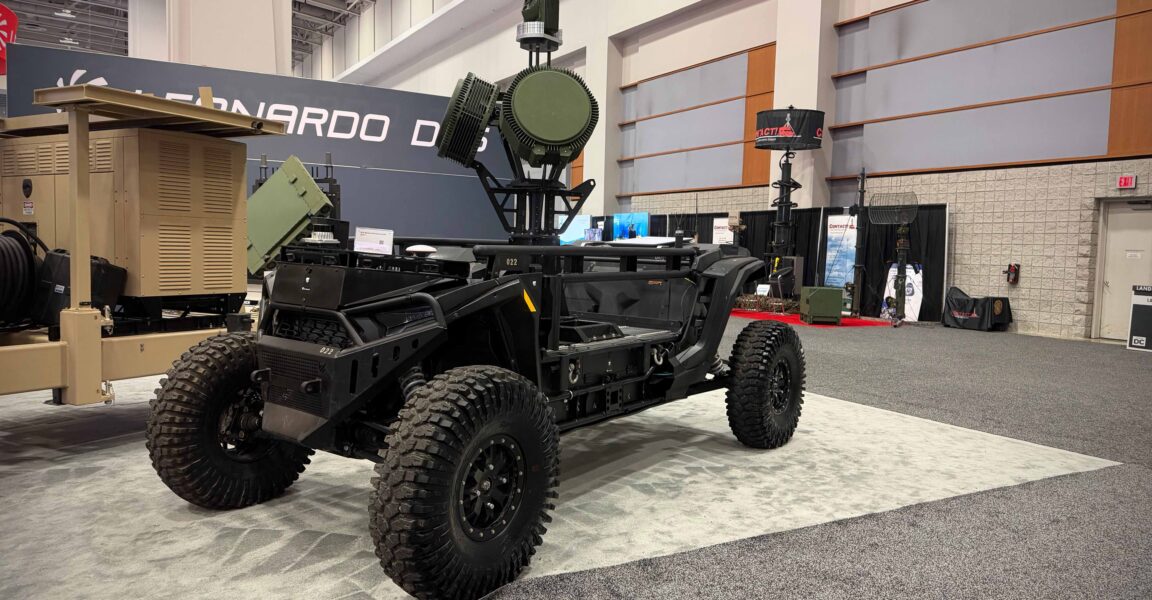
OverlandAI’s ULTRA autonomous ground system hosts a multi-mission hemispheric radar from Leonardo DRS, shown here at the 2026 AUSA expo. (Breaking Defense)
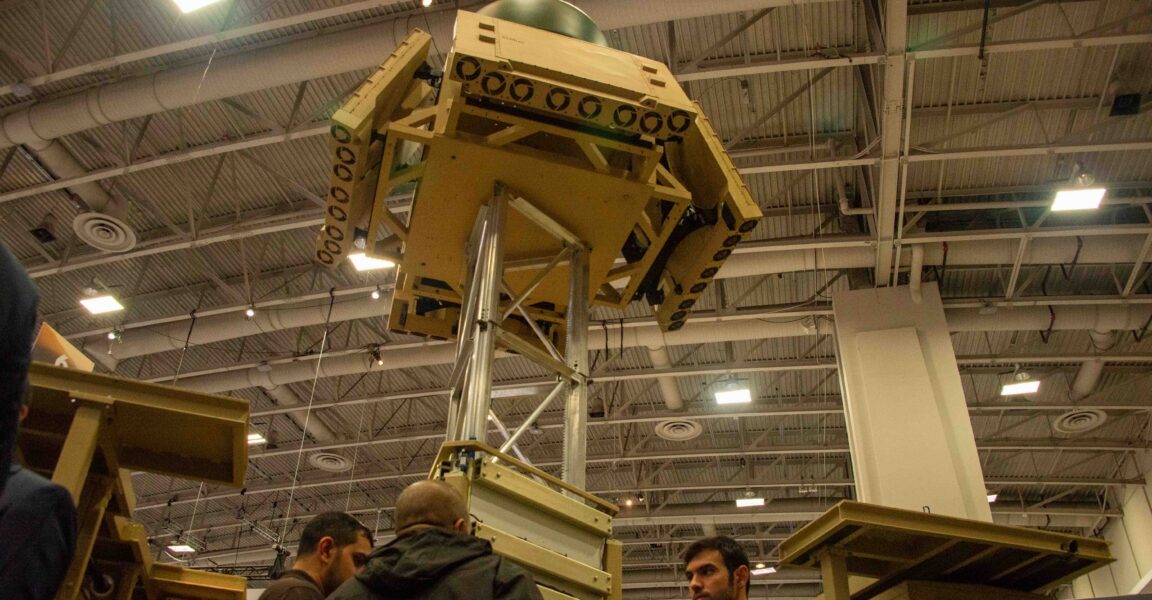
Leonardo DRS displays its Extended Mast Surveillance System, which features an exMHR radar system on a trailer platform with an extendable mast for a higher-altitude perspective. (Breaking Defense)