The future of Zero Trust
Zero Trust leader Randy Resnick provides a status update and discusses new initiatives.

Barry Rosenberg is an expert journalist in defense cybersecurity and information technology issues. He is former editor of the trade magazine C4ISRNET, which he helped relaunch in 2013. Before that he was editor of Defense Systems at 1105 Media, focusing on IT and C4ISR topics. He recently worked in key content roles at information technology firms SILA, which specializes in blockchain technologies and cyber security, and Trace Systems. Earlier in his career he was founding editor of Aviation Week’s Overhaul & Maintenance magazine, editor of Defense News’ show daily and managing editor of Aviation Week’s Show News. Rosenberg is a Philadelphia native, an avid writer and co-author of "Mavericks of the Sky: The First Daring Pilots of the U.S. Air Mail".
Zero Trust leader Randy Resnick provides a status update and discusses new initiatives.
Indo-Pacific allies see unmanned systems, shared production, and interoperability as essential to offset China’s scale.

Do more with less: streamline workflows, reduce duplication, invest upfront to save long-term.
“Tactical operating system” for warfighters has evolved to provide more situational awareness of the battlefield.

Rather than getting networks back online quickly after an outage, focus more on defending the network in the first place, Air Force Chief Information Security Officer Aaron Bishop said.

Weapon systems procurement is also evolving to include new Zero Trust cybersecurity measures that don't affect mission execution.

A zero trust end state is not redundancy or recovery but an infrastructure that never goes down in the first place.

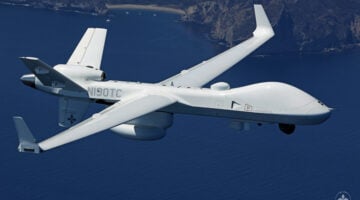
General Atomics Aeronautical Systems, Inc. (GA-ASI) has been the trailblazer in the UAS revolution for over three decades.

As cyber veterans exit active duty, a new Reserve offensive squadron gives them a way to keep executing missions, an officer told Breaking Defense.
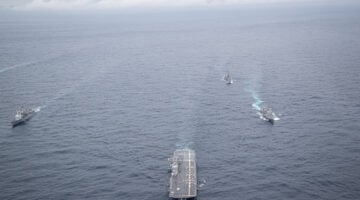
Industrial imbalance grows in the Indo-Pacific as China outbuilds the region in ships and rockets.
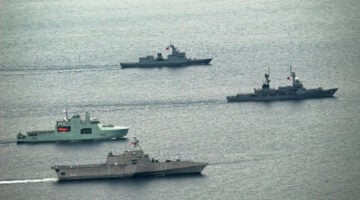
Strategic geography, resupply corridors, and maritime access underscore Manila and Tokyo’s ability to assist Taiwan.

DoD labs are stress-testing anti-jam systems so warfighters can command and control in the face of EW.


As global navies adapt to evolving underwater threats, ASELSAN’s integrated sonar, countermeasure, and sonobuoy solutions offer a scalable, future-ready approach.
Convergence of offensive and defensive cyber is reshaping how they're developed, fielded, and integrated.
CDAO’s Advana data analytics platform is ingesting data from about 500 DoD business systems.

Nations such as the Philippines and Taiwan are building new ties as part of a regional military rebalancing.

Michigan’s defense ecosystem and expertise makes it a special asset for production.