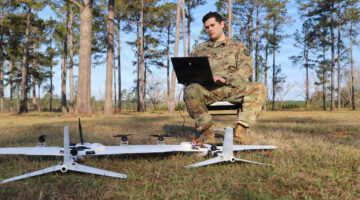
Army requests funds to speed development, production of EW systems
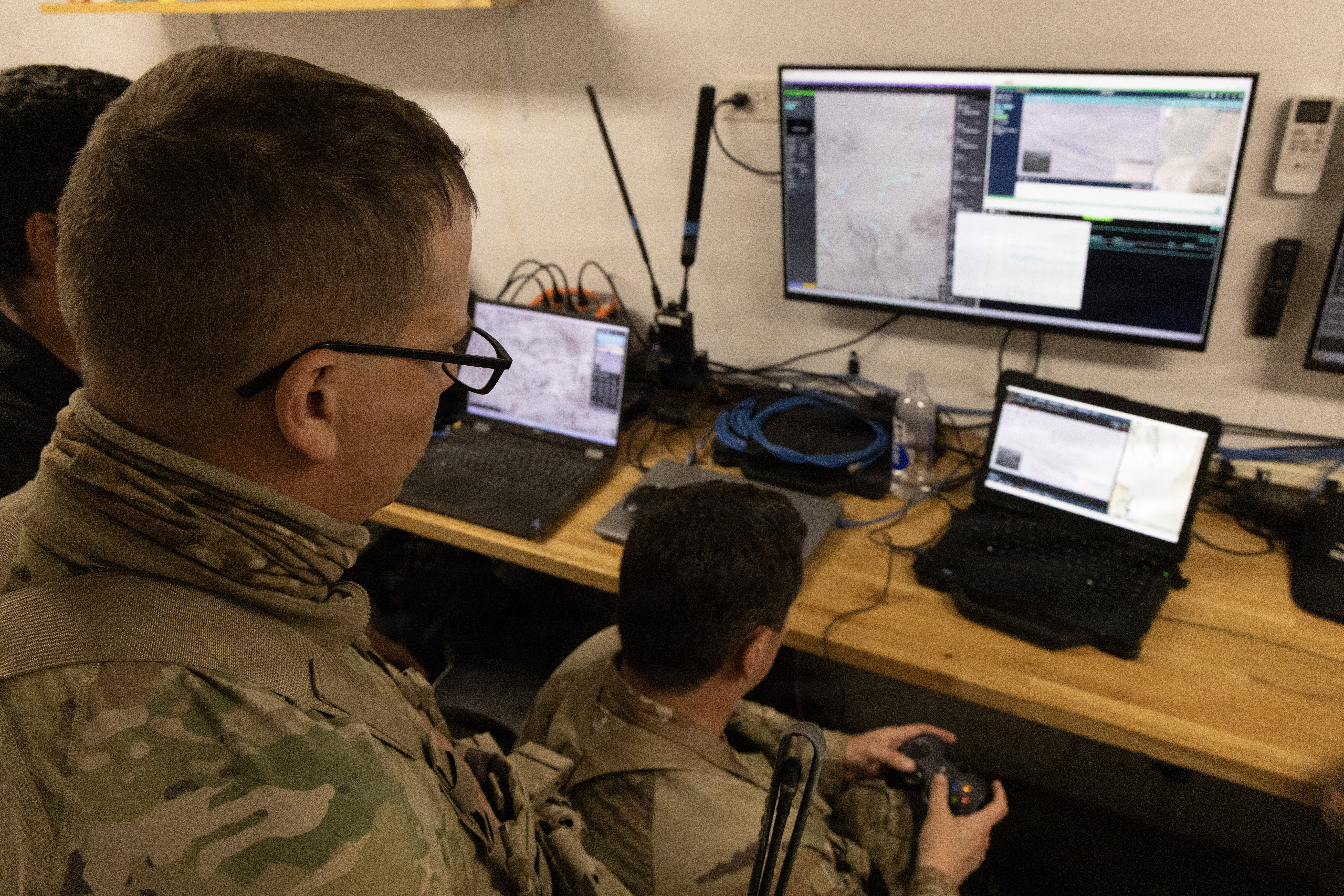
The Army's FY27 budget request allows faster fielding and continued experimentation on key electronic warfare and signals intelligence capabilities.
The commercial solutions offering aims to produce a "library" that will provide options for units to determine what capabilities meet their structure and mission.
The Army wants industry to pitch EW capabilities to solve broad-based problems.
While senior officials have offered praise with few details, experts told Breaking Defense space ops likely include jamming or spoofing satellite communications.
“Unlocking the potential for spectrum operations at machine speed will be key to winning the EMS fight,” Col. Scott Shaffer said.
From emerging data networks to missile tracking and cyber resilience, Breaking Defense’s latest eBook brings together essential reporting on the evolving role of satellites in national security.
“We are definitely seeing, many times over, an over-reliance on technology,” Capt. Jake Thomas told Breaking Defense.
The six men range from a former Amazon exec to a biologist who studied jellyfish stinging Navy divers, but all have extensive experience in the Defense Department’s tech apparatus.
Space Force leaders consider orbital warfare training with live satellites a vital piece of the service's nascent Operational Test and Training Infrastructure (OTTI).
Australia's defense minister said that MC-55A represents a significant step forward in the ability to monitor and protect strategic interests, including key maritime approaches.
“Once you emit, you are a target,” warned Laurence Mixon, the senior civilian in Army Intelligence, Electronic Warfare, & Sensors (IEWS).