
EU deepens collective space security with mutual defense pact
The move is one more step in the EU's long-running, but recently accelerated, effort to create "strategic autonomy" in the space arena.
The move is one more step in the EU's long-running, but recently accelerated, effort to create "strategic autonomy" in the space arena.

The European Union also is funding a series of grant making projects designed to bring innovative technologies into the EU SST program, and support startups to strengthen the industrial base.

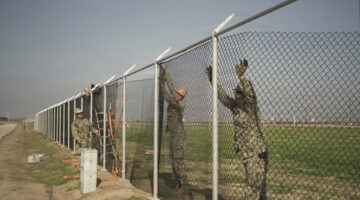
Traditional thinking about how to protect facilities must adapt to new threats such as drones or downstream attacks.

Overall investment in the high profile program is expected to push beyond $18 billion, with first satellite launches slated for 2029.

Burnham will likely want to continue many aspects of Keir Starmer’s approach to defense and security policy, but with some key differences.
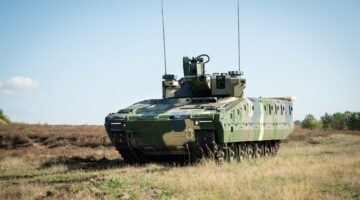
Romania is due to become the second Lynx operator on NATO's eastern flank after Hungary's 2020 order of 218 vehicles.
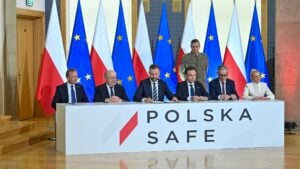
In December, Canada became the only non-European country to gain entry into the €150 billion SAFE defense borrowing and procurement scheme.

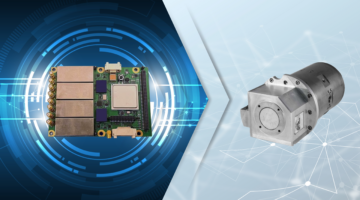
As threats continue to evolve, speed will increasingly depend on what is already available when the need emerges.

The European Defence Industry Programme covers funding for 2026 through 2027 with a first round of calls for proposals opening on the EU’s tender portal starting on Tuesday.
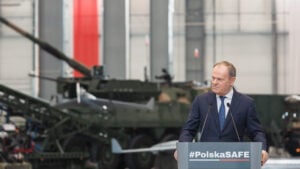
According to Poland’s government, the money, which will be spent between 2026 and 2030, will go to a wide variety of systems, including artillery, cybersecurity, ground combat and more.

Funded by the EU’s European Defense Fund and led by Spanish-based multinational GMV, PRECISE will use AI to analyze satellite imagery and recreate 3D models of critical sites.

"We've invested more than a billion dollars in securing material ahead of orders, and that makes it a lot easier [to deliver on new orders]," said Tom Laliberty, president of land and air defense systems at Raytheon.

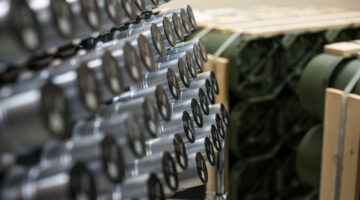
APKWS® laser‑guidance kit provides reliable precision‑guided munitions across missions and platforms, delivered quickly to meet evolving operational demands.

Germany is sprinting to pump up its military space systems, perhaps changing the balance of power in setting European-wide priorities.

'Unsettled' is a polite word for 2025 in the space domain.
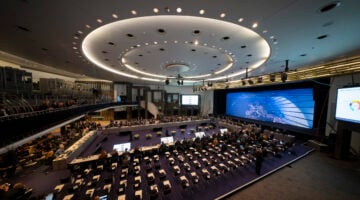
ESA's ruling Council of Ministers approved a whopping $25.7B in funds over the next three years — a 32 percent increase over the previous three-year budget.
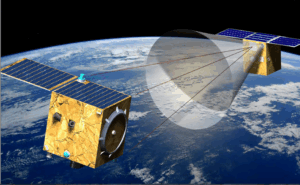
The new strategy calls on German MoD to develop a number of new space-based capabilities, including "effectors" to counter adversary threats on orbit such as agile spaceplanes and "bodyguard" satellites with shoot-back systems.