BEIRUT — The US State Department has approved a possible foreign military sale of Anduril-made counter unmanned aerial systems (c-UAS) to Kuwait, just a few days after Iranian drones attacked the Gulf state’s airport.
The deal comes with an estimated price tag of $1.98 billion. Quantities and dollar totals often shift during negotiations, and the announcement tees up an opportunity for lawmakers to block the deal within a 30-day period, though such a step is rare.
“The proposed sale will improve Kuwait’s capability to meet current and future threats by providing electronic and kinetic defeat capabilities against unmanned aerial systems,” the State Department said in a June 5 statement, adding it will improve “the security of a major non-NATO ally that has been an important force for political stability and economic progress in the Middle East.”
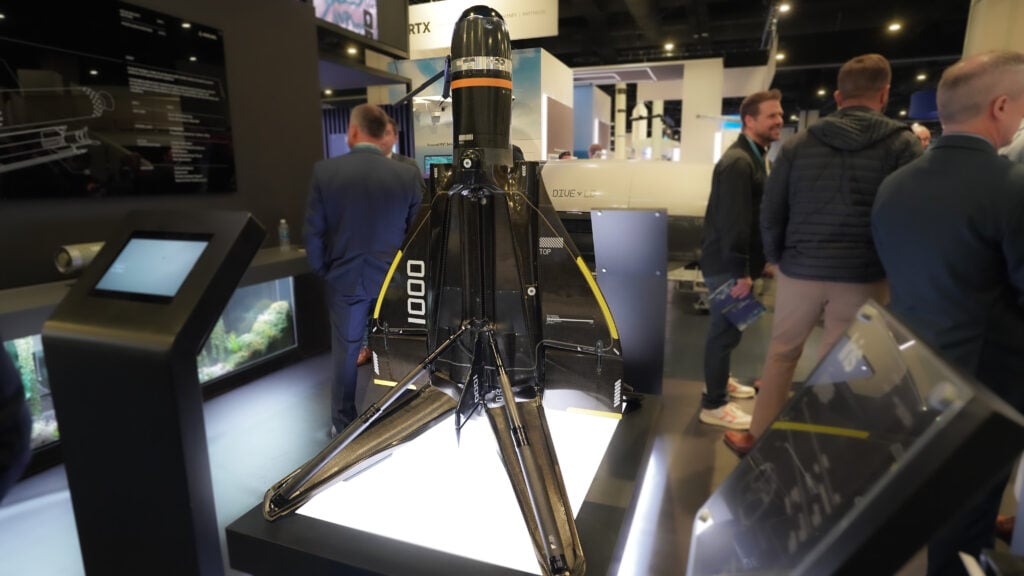
The statement, posted on the State Department’s website, specifies that Kuwait requested “counter-unmanned aerial systems platforms Roadrunner-Munition and Anvil-Kinetic; launch boxes; lattice command and control; Long Range Sentry Tower with Fire Control; Long Range Sentry Tower-82 Mobile; Extended Range Sentry Towers; Maritime Sentry Towers; pulsar electromagnetic warfare; menace tactical operations centers; generators,” as well as personnel training and logistical support.
FMS cases often take months or even years to get to the point of being announced, but the timing of the announcement underscores the need. On June 3, Iran attacked Kuwait’s airport with missiles and drones, killing one person, damaging airport facilities and halting flights. This attack comes amid a ceasefire struck between the US and Iran, and ongoing negotiations for an agreement between both rivals.
Retired Kuwaiti air force Col. Zafer Al Ajami told Breaking Defense that the deal marks a strategic pivot for Kuwait, from solely relying on heavy missiles like Patriot to address low-altitude threats.
The airport strike “exploited a vulnerability: low-cost Shahed drones overwhelmed Patriot batteries. The new systems specifically counter such saturation tactics, providing the short-range, high-speed reaction time needed to protect the airport and other soft targets from future Iranian aggression,” Al Ajami said.

If software and agentic AI are key to mission success, accelerate them to the front lines
A commercial prototype in a sandbox is different from deploying AI across classified networks.
“For a wealthy nation bordering Iran, this investment fills a critical gap in protecting its population, vital oil infrastructure, and civilian assets — directly supporting its national security and political stability,” he told Breaking Defense. “The deal enhances Kuwait’s defenses by introducing a layered, integrated counter-drone network.”
Kuwait and other Gulf states were heavily attacked by Iran after US/Israeli strikes on Tehran, and since the attacks started Gulf states are seeking ways and air defenses to counter Iran’s threats.
Breaking Defense Video