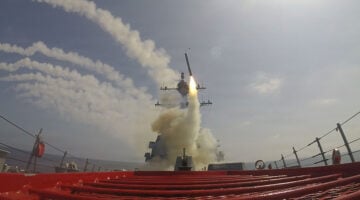
3,000 strikes, 43 ships hit: US operations against Iran by the numbers
The US says it has hit more than 3,000 targets, while Iran has retaliated by launching attacks on a dozen countries.
The US says it has hit more than 3,000 targets, while Iran has retaliated by launching attacks on a dozen countries.

Analysts noted that after decades of underinvestment, Berlin is flipping the script by moving ahead with a seismic increase in defense spending, set to hit a high mark in 2029 of €150 billion a year.


The Sixth Domain is not defined by geography. It’s a new kind of conflict in which autonomy and networked systems allow thousand-dollar consumer electronics to destroy multi-million-dollar conventional weapons systems.

The DoD is about to choose the winners from its "Gauntlet" unmanned exercise and provide successful systems to military units "over the next five months," a DoD official said.

“Given the high demand for internal security in Latin America, EDGE’s approach in the region is emphasizing border control, surveillance, drones and anti-drone systems, cybersecurity, and non-lethal ammunition, rather than more traditional types of military equipment," a defense analyst said.

In a social media post today CENTCOM said the missile provided “an unrivaled deep strike capability” against Iranian targets.

This week on The Break Out, CNAS's Stacie Pettyjohn breaks down the ongoing US strikes on Iran.

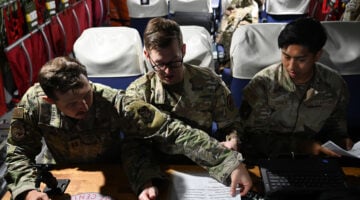
Do more with less: streamline workflows, reduce duplication, invest upfront to save long-term.

When drones can watch your every move and jammers scramble your communications, you need to keep your battle plans and your org chart simple, say officers from the Army’s National Training Center.

A former senior cyber commander noted that one of the biggest differences between one-off strikes like Operation Midnight Hammer last June and the current operation is that supporting elements will be working 24/7, focused on targets offensively, defensively, information operations and intelligence.

“We’re not just seeking funding,” said David Fitzgerald, who is performing the duties of the deputy undersecretary of the Army. “We’re seeking creative, out-of-the-box financial and business models that break the mold."
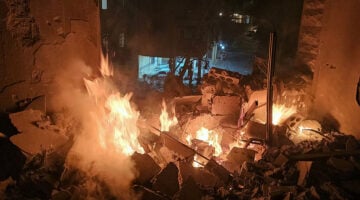
Retired Lebanese armed forces general Maroun Hitti said that Hezbollah’s missiles has “instantly transformed Lebanon from fragile bystander to active battlefield,” describing the situations as “harsh and asymmetric.”

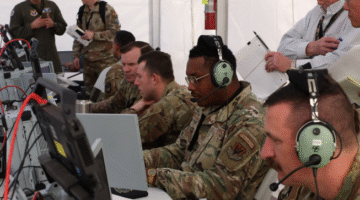
As threats rapidly evolve, digital engineering, manufacturing capacity and robust supply chains are critical to meeting challenges.

According to Poland’s government, the money, which will be spent between 2026 and 2030, will go to a wide variety of systems, including artillery, cybersecurity, ground combat and more.

Sources told Breaking Defense a new RFI may be a backdoor effort to speed up, or potentially revamp entirely, the Bradley replacement competition.
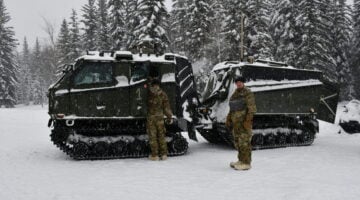
During the Joint Pacific Multinational Readiness Center 26-02 rotation, the US Army's 11th Airborne Division emulates what an Arctic conflict would look like.

Gen. Chance Saltzman, Space Force chief, said the work already done to design a satellite system for tracking ground targets should also help speed AMTI capabilities to orbit.