WASHINGTON — As the Pentagon has been making a major effort to spread small drones across the force, logical questions have emerged about how the Pentagon plans to store these systems and how much money it will take to maintain and update them.
The solution, it turns out, is simpler than anyone could have expected: fly them “until they break,” according to one Army official.
“The Army had told us right away when we started this that none of this stuff’s getting stored on shelves because the iteration cycle is so much that we have to manufacture to deliver, not to stock,” Jon Strzelec, advanced manufacturing lead for small drones at Army Materiel Command, told Breaking Defense during an October interview.
At the core of the challenge is the reality that these drones become oboslete quickly. In Ukraine, Strzelec said, Russia can come up with a countermeasure for a new drone within 72 hours, forcing Kyiv to continue to upgrade and iterate on its designs. Subcomponents like the software, the circuit cards, the radio sets and cameras are all vulnerable to counters and need to be swapped out quickly.
“For us to take a drone off the shelf and take it apart, pull a card out, put a new card in it, flash the software, it’s cheaper in the assembly line process just to make a new one,” he later added.
Instead of using the word “sustain,” he added, the word for these smaller drones is “replace.”
The Pentagon is moving out on several efforts to buy new, small drones through efforts like the Drome Dominance program – a gauntlet-style competition billed as an avenue for spending $1 billion over two years – and broad plans to spend nearly $55 billion on its replacement for the Biden-era Replicator initiative that is called the Defense Autonomous Warfare Group (DAWG).

Three exercises that proved a new approach to C-UAS
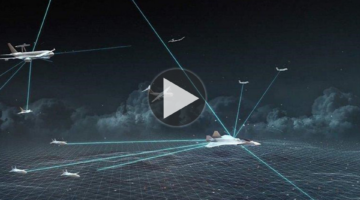
Architecture that linked sensors, C2, RF effects, and lasers into a distributed c-UAS kill chain.
After gleaning observations from Ukraine, Army soldiers are expected to be a top consumer weapons with a mandate from Defense Secretary Pete Hegseth for every squad to be outfitted with them.
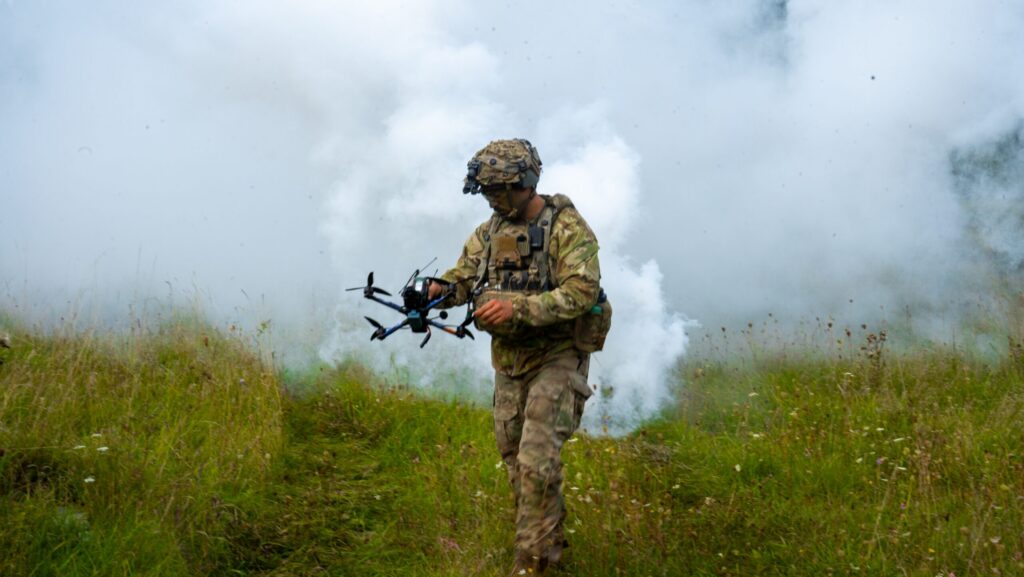
As of the interview, the Army was in the process of receiving 10,000 of the first 30,000 small drones out of the Drone Dominance Gauntlet 1, Strzelec said. Those drones will be sent to units for training, just like the Army does with equipment like M16s, Humvees and gas masks. The entire point is for soldiers to figure out how to train with them and use them in combat, not for them to sit on a shelf.
“It’s not just go crash in a tree and smack a high five,” Strzelec said. “It’s literally fly it as close as you can between those two fence posts because you might have to hit a high value target that way. And, if you crash 10 of them until you can get [number] 11 through, do it.”
“They’re practicing, they’re training but as they break, we’re not sustaining them,” he said separately.
James Slider, CEO of Performance Drone Works, told Breaking Defense that this Army plan to train with smaller drones solves the stockpile challenge he and others had been mulling over, especially given that on the “fast side of innovation cycle is three months” for these weapons.
Strzelec’s comments also fit into a larger concept outlined by Air Force Col. Dustin Thomas, the head of the Defense Contract Management Agency’s Unmanned Systems – Experimental (US-X) Command, in a trio of essays published by Breaking Defense. In those pieces, Thomas argued that the Pentagon needs to consistently be iterating and not be afraid to destroy these small systems, potentially to the rune of crashing 100,000 a year in order to better learn how they work.
Larger Systems, Different Plans
However, Strzelec was quick to note that what works for smaller systems may not be as applicable to slightly larger systems.
For some drones in group two category (21 to 55 lbs) that may be more expensive, and used to fly higher for intelligence, surveillance, and reconnaissance missions or delivery operations, those will likely be sustained and used for longer.
“Mission set will dictate when we’re going to be using drones multiple times and as you change mission, you change cost, and so cost is going to be the driver of which ones are throwaways and which ones aren’t,” Strzelec added.
Strzelec’s comments will likely be welcomed by analysts, several of whom have told Breaking Defense in recent months that they are concerned the Pentagon is rushing to buy large quantities of systems without a clear plan for how to manage them long term.
Joe Costa, a former Pentagon official and currently the director of the Forward Defense program of the Scowcroft Center for Strategy and Security at the Atlantic Council, recently told Breaking Defense the Pentagon should be “unquestionably” building out a sustainment plan given how much money it’s planning to spend.
“Who’s going to sustain them? Where are they going to be sustained? Is it going to be on the front lines?” he said.“The general challenge here is we think of drones very commonly now as attritiable. We use them, and then we’re going to let them go away. But some of the more advanced ones, you do want to come back to us.”
Erin Dumbacher, a former Pentagon official and currently with the Council on Foreign Relations, echoed similar questions and questioned the department’s plan for when components and software became obsolete.
Breaking Defense Video