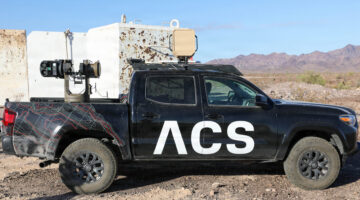
Allen Control Systems launches new division to develop counter-drone lasers
The announcement comes amid the Pentagon's growing interest in laser weapons, which use concentrated beams of energy to heat and destroy targets.
The announcement comes amid the Pentagon's growing interest in laser weapons, which use concentrated beams of energy to heat and destroy targets.
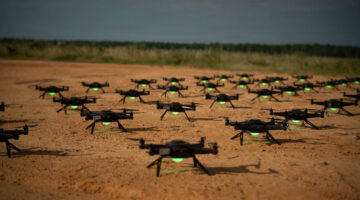
The Army innovation hub's first year also revealed the challenge of making sure promising technologies don’t stop at the prototype stage, FUZE Director Matt Willis told Breaking Defense.

From autonomous warfare and drone innovation to acquisition reform and defense industrial base challenges, Breaking Defense examines the key developments and strategic priorities shaping the US Army’s future at AUSA 2026.

There is no single answer to the drone threat, pushing the Pentagon toward a broader mix of defenses.
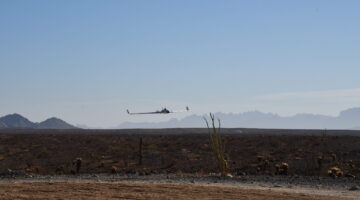
AeroVironment, Epirus, Kord and Boeing were selected for JIATF-401's pilot program.

The Army awarded 10 companies for a variety of counter-drone tech including sensors, effectors and C2 systems, Brent Ingraham, the head of ASA(ALT), told reporters.

While overall effectiveness is high, damage to US bases and assets in the Iran conflict shows gaps in air-and-missile-defense.


Expanding manufacturing capacity is critical to producing missiles, radars, and launch systems.

“One of the key exciting components of this particular production program is introducing production-directed energy for the first time in the nation's history,” AV’s vice president of directed-energy systems told reporters.

The task force did not disclose exactly where the drones were engaged or who was suspected of flying them, but suggested they could have been used for reconnaissance by a drug cartel.
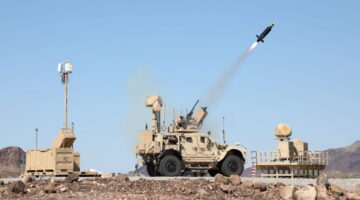
The interceptor, dubbed the Next Generation C-sUAS Missile, must be compatible with Raytheon's Coyote launcher, per the RFI.

JIATF-401 also awarded AeroVironment (AV) a $500 million three-year contract earlier this month.


Quickly and accurately identifying friendly forces requires IFF attuned to drones.
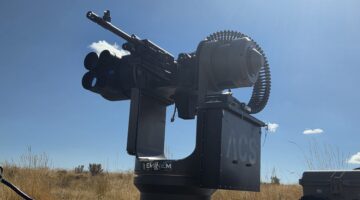
The AI-powered robotic weapon, which weighs roughly 300 pounds and is capable of firing 850 rounds-a-minute, can detect and neutralize small unmanned aerial systems, Allen Control Systems said.

Army Secretary Dan Driscoll said the new LCIs are "not intended" to replace any existing, exquisite air defense systems, but are intended to "supplement" such products.

Mapping Europe’s modernization from the Eastern drone wall to actual artificial intelligence resident in tanks.
“It’s a game changer. It’s smaller, uses only 4kWh, can be connected to a vehicle, and is three to four times less expensive than current laser or microwave systems,” Erex Riahi, the CEO of Esh-Tech, said.