Key questions, and an expert take, after US strikes Iran
This week on The Break Out, CNAS's Stacie Pettyjohn breaks down the ongoing US strikes on Iran.
"Aerial refueling capacity has historically been a major constraint on the tempo of operations, and it’s likely the case today," Tim Walton, a senior fellow at the Hudson Institute, told Breaking Defense.
"We cannot be satisfied with our current trajectory and I owe the nation the absolute assurance that our nuclear deterrence remains credible," French President Emmanuel Macron said.
“We're not going to go into the exercise of what we will or will not do,” Defense Secretary Pete Hegseth told reporters.
The new AW149 fleet is desperately needed to plug a rotary capability gap left by retirement of the Puma HC2 fleet in March 2025.
Retired Lebanese armed forces general Maroun Hitti said that Hezbollah’s missiles has “instantly transformed Lebanon from fragile bystander to active battlefield,” describing the situations as “harsh and asymmetric.”
“If Iranian attacks continue throughout this week, I would expect the Gulf Arab states to eventually participate in counter-attacks on Iran," one defense expert told Breaking Defense.
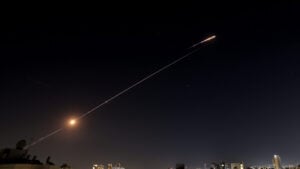
The US and Israel together launched a surprise, "massive" attack on sites throughout Iran beginning early Saturday.
"We're going to destroy their missiles and [raze] their missile industry to the ground. It will be totally again obliterated. We're going to annihilate their Navy," said US President Donald Trump.
According to Poland’s government, the money, which will be spent between 2026 and 2030, will go to a wide variety of systems, including artillery, cybersecurity, ground combat and more.
The G550-MSA is the latest in a series of major defense acquisitions announced by Singapore for the maritime domain in recent years.
Middle East Bureau Chief Agnes Helou on the latest industry moves in the region at the World Defense Show in Saudi Arabia.
“Drones could augment Taiwan’s limited stockpile of expensive weapons with precise, affordable mass that produces cross-domain effects while reducing risk to military personal by employing uncrewed systems for the most dangerous missions," the Center for New American Security report says.
Separately, state-owned Havelsan announced the commissioning of an armed unmanned surface vessel, dubbed Sancar, on Tuesday.