DAYTON, Ohio — The Air Force plans to winnow a pool of nine vendors down to as many as six next year for a second round of its drone wingman program, according to a top service official.
An ongoing “concept refinement” stage is slated to last “another approximately 10 months,” Col. Timothy Helfrich, the Air Force’s program acquisition executive for fighters and advanced aircraft, said Tuesday during a media roundtable with reporters here at the Life Cycle Industry Days conference.
At the end of that concept refinement stage, the Air Force expects to get up to “six closed conceptual designs,” Helfrich said. Mirroring a similar construct for the Collaborative Combat Aircraft program’s first round, or “increment,” the Air Force subsequently expects to issue deals for prototyping and then, eventually, production contracts, Breaking Defense previously reported.
Helfrich did not specify when the deals would be awarded, or whether the up to six conceptual designs the service is aiming for could be carried forward into prototyping.
“We will continue to maximize competition through all the phases of CCA increment 2,” Helfrich said, emphasizing that new entrants who lose out on earlier deals could still compete for later stages.
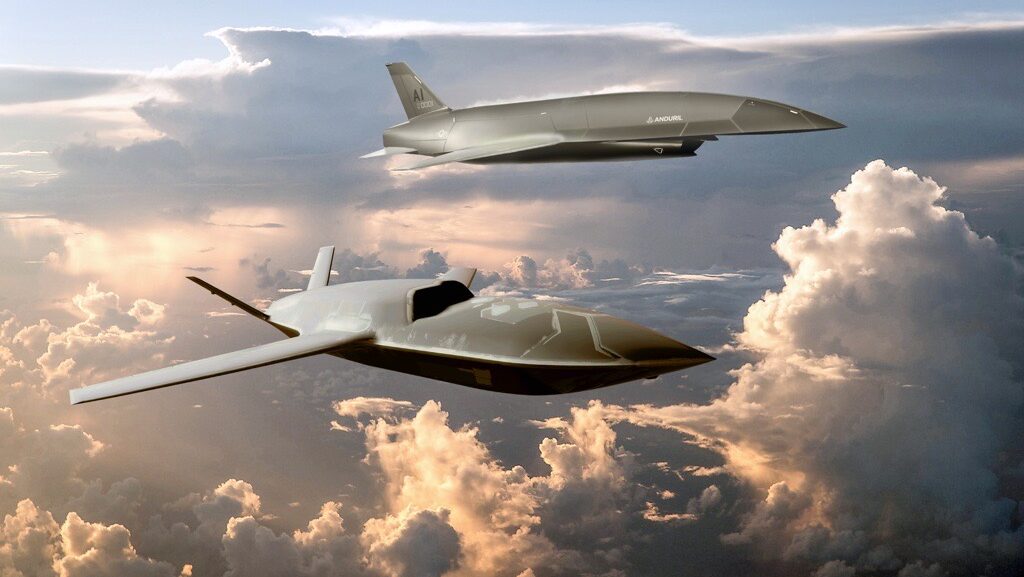
Helfrich did not say what kind of designs would be carried forward, but the Air Force has said the ongoing concept refinement is evaluating a wide range of options, from cheaper, more attritable drones to exquisite designs. The Air Force’s first CCA increment recently entered production with drones developed by Anduril and General Atomics.
As part of that work, the Air Force is investing in what officials have said are dormant segments of the propulsion market to open up options for potential wingman candidates. One set of awards issued to four vendors is developing engines with 1,400 to 1,600 pounds of thrust, and a second set of contracts awarded to two firms is aimed at a “medium” thrust class of 5,000 to 6,000 pounds.

Three exercises that proved a new approach to C-UAS
Architecture that linked sensors, C2, RF effects, and lasers into a distributed c-UAS kill chain.
Helfrich explained that CCA increment 2 drones are not “constrained” to those two separate thrust classes, but that the engine work will be poised to offer an option if a drone with those needed attributes is selected.
In a separate media roundtable on Monday, John Sneden, the chief of the Air Force’s propulsion directorate, said engines in the medium thrust class could be a “ground up, new design” similar to those in the lower thrust class range, or could be modified from designs already available off-the-shelf.
Sneden said they’re not taking something directly off-the-shelf “because we think that the requirements and the needs are going to be greater for CCA increment 2, and we need to have propulsion systems ready for that.”
Reaper Replacement
In partnership with the Defense Innovation Unit, the Air Force is also scouting for a cheaper, more loss-tolerant replacement for its MQ-9A Reaper drone fleet that has reportedly seen considerable losses amid war with Iran.
DIU on July 7 launched a competition for the unmanned replacement, dubbed the Mass Modular Aircraft (MMA). The program’s posting said viable candidates should be able to “execute” missions conducted by the MQ-9A, and provided some notional guidance by describing “exquisite” drones as those that cost $30 million or more, meaning MMA proposals should cost less than that figure.
In a media roundtable on Monday, Col. John Dayton, the Air Force’s portfolio acquisition executive for intelligence, surveillance and reconnaissance (ISR) and special operations forces (SOF), said the DIU competition generated “a very robust industry response.”
During the same roundtable, Col. Todd Dye, the senior materiel leader for the ISR/SOF directorate’s medium altitude ISR division, said similar to the CCA program, contract awards for the MMA’s “concept refinement phase” are expected to be doled out in the first quarter of fiscal 2027.
Breaking Defense Video