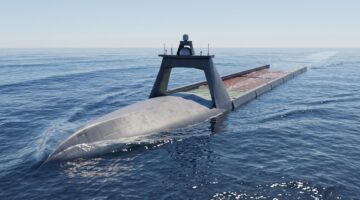
Drones and autonomous warfare: ‘One-way attack’ and reshaping ISR
Systems that can work independently while still being part of a unit are critical to carrying out multi-domain operations.

Systems that can work independently while still being part of a unit are critical to carrying out multi-domain operations.

Connecting platforms and data across domains is key to keeping ISR effective under attack.


As threats continue to evolve, speed will increasingly depend on what is already available when the need emerges.

CBSA's Travis Sharp and Ryan Kaufman analyze NATO's recent decision to purchase high-dollar American drones.

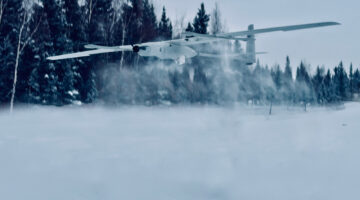
It’s fuel cells, not batteries, that let Group 2 unmanned VTOLS fulfill many missions of larger Group 3s.


Absolute positioning is critical in contested and denied environments.
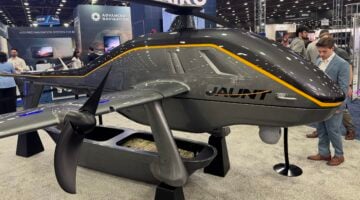
Company executives told Breaking Defense the dual-use design targets a logistics gap between rear-operational hubs and forward units.

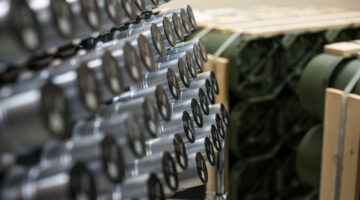
APKWS® laser‑guidance kit provides reliable precision‑guided munitions across missions and platforms, delivered quickly to meet evolving operational demands.

“There is, I think, a burgeoning interest across the broader defense industrial base on what comes next,” said Air Force Lt. Gen. Luke Cropsey.

“We are already using artificial intelligence, image processing, machine learning and things like that. But we are also going more deep and deep in those areas,” the company’s general manager told Breaking Defense.


Red Cat, well known for its aerial drones, has launched Blue Ops, a new company to mass produce USVs.

Marines could begin operational testing with drone wingmen in 2029, and in the future could conduct their own intelligence, surveillance and reconnaissance missions in lieu of contractors, officials said during the Modern Day Marine conference in Washington.

Explore how software, edge AI and resilient connectivity can strengthen military logistics in contested environments. Join Breaking Defense on Oct. 21 and earn 1 CPE credit.

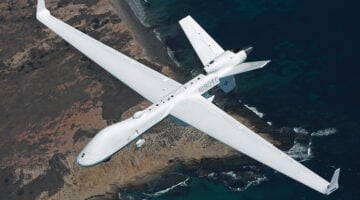
The MQ-9B and Gambit Series represent parallel capabilities that address global challenges for security head-on.

Gulf Cooperation Council countries are "one of the top export markets for ARES in the future,” ARES Shipyard CEO Oğuzhan Pehlivanli told Breaking Defense.

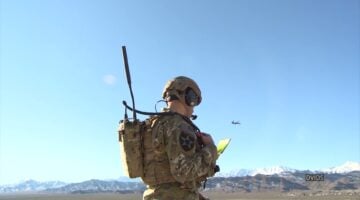
The future of ISR lies in integrating human expertise with AI-driven analytic tools at scale.

An Army spokesperson told Breaking Defense that the current plan is for the service to acquire six production aircraft and three prototypes for the HADES program.